🎉 Welcome to The Tapa, an English-language, weekly newsletter about all things Spain!
🥜 This Week in a Nutshell: It was debate night on Monday and most pundits agree it was a mess. Also, we’re now 10 days away from the elections and in the midst of a heat wave so expect people to complain even more about voting in the middle of summer.
🙏 Remember that if this email gets truncated at the bottom because it’s too long, just click here to read the rest on Substack.
🙌 But no there’s more! The Tapa now has its very own LinkedIn page to grow a new community. Please check it out and, if you’re so inclined, follow us here.
🕺If you haven’t subscribed yet, please do so by clicking on the button below.
Monday night at the family-friendly time of 10 p.m. Spanish TV offered voters the one and only chance to watch PSOE socialist Prime Minister Pedro Sánchez and poll-leading center-right Partido Popular (PP) candidate Alberto Núñez Feijóo sit face-to-face across a table and interrupt each other. It was advertised as a debate, though that is far too highfalutin a word for what we saw. “Ill-tempered cage match between two men in suits”, perhaps?
The pre-match prediction was for a knockout. The debate-hardened Sánchez was expected to wipe the floor with the gaffe-prone Núñez Feijóo, much like he had with right-of-center TV interviewers like Pablo Motos on El Hormiguero. The question was, would Núñez Feijóo live to keep some sort of lead—and fight another day?
But that so did not happen. The debate went badly enough for Sánchez that even a substantial minority of his own PSOE voters (22%) thought he lost the debate. ERC pol Gabriel Rufián, who has supported Sánchez against the PP and Vox, said he was “surprised” to see Sánchez “disorderly, slow or off pitch” compared to a “fast” Feijóo who, “practically the whole world thought won.”
Ultimately, there was a lot of yelling, accusations of lying and (for those of us not on the stage) the sensation of a missed opportunity.
So what exactly happened?
Sánchez repeatedly accused the PP and Vox of “being the same” (“Scary, scary, vote for me!”) while Feijóo insisted that Sánchez was buddies with the political descendents of ETA terrorists (“Scary, scary, vote for me!”). The PP boss also insisted they both sign a document (which he had brought with him, conveniently) in which they would commit to allowing the most voted party to govern—a kinda cynical ask that would allow PP to lead without having to form a coalition with Vox, and would not allow other parties to form a majority.
And what does this mean for the last 10 days of the campaign?
Of course, all we can do is guess. But the blame game within the PSOE came quick and cruel. Some said Sánchez didn’t rehearse the face-to-face format (or “sparring”) enough. Others that expectations were so high for Sánchez that it favored Feijóo.
Others simply said NúñezFeijóo was so effective in the first few minutes of the debate, in which they discussed the economy (supposedly Sánchez’s strong point as it’s done well, all things considered), by spewing data non-stop, sometimes presenting “false data” (aka lies), that it made Sánchez “nervous” and didn’t let him “find his rhythm”.
Socialist party leaders told El País they believe “Feijóo wanted to muddy the waters from the very beginning, and he succeeded. The leader of the PSOE was left bewildered, unable to deliver his messages even in the most favorable block for him.”
Now that we’re getting really close to election day, Núñez Feijóo is capitalizing on his debate performance by mocking Sánchez in political rallies.
Sánchez responded to NúñezFeijóo’s debate statements, while speaking at the NATO summit in Vilnius, by saying the PP leader employed a “mountain of lies” in the debate (he’s not entirely wrong about this).
So..not friends? Right. Sánchez will continue to work on scaring voters by saying. the PP is Vox, while Núñez Feijóo will work on acting like the boring centrist who may have to bring a hard-right party into the gov but can handle it (“Don’t worry—they won’t have the power to do anything. Really!”).
Polls taken in the days immediately after the debate found that the PP rose and the PSOE dropped by several seats, but the race still remains very tight. Expect a close election where the two questions are 1) do the PP and Vox, together, win enough seats to form a majority, and 2) if so, how close is the PP to the 176 needed? If they have 150, they will need to give Vox much less power than if they have 135. Exciting times!
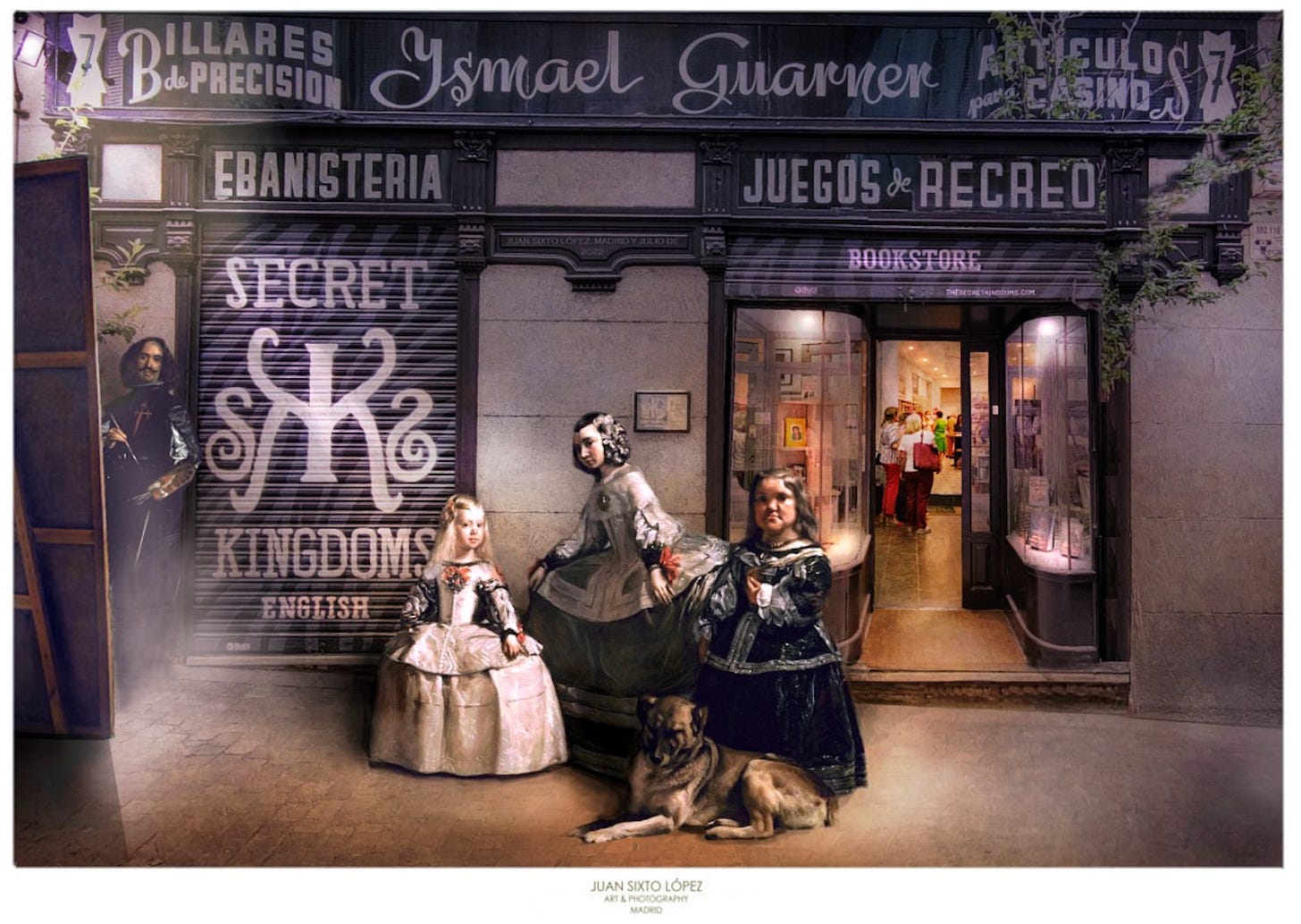
Secret Kingdoms is your English bookstore in Madrid. It specializes in Spanish history and literature, contemporary and classic novels, books for children and young adults of all ages, history and historical fiction, thrillers, science fiction, fantasy, poetry, biographies and much more.
Located on Calle de Moratín 7 — a few blocks away from the Prado Museum — and with over 20,000 new and used books, Secret Kingdoms has something for everyone.
The drama is about the wedding of Tamara Falcó and Íñigo Onieva, who got hitched last weekend. But of course you know that because you’re on top of all the most important Spain news.
Just kidding! For those who don’t spend hours reading celebrity mags, Tamara Falcó is the socialite daughter of Carlos Falcó, 12th Marquess of Castel-Moncayo, and Isabel Preysler, who is famous for having been in long relationships with both guapo singer Julio “To All The Girls I've Loved Before” Iglesias and Nobel literature laureate Mario Vargas Llosa (Isabel’s interest in the arts is broad).
Onieva is a playboy/car designer/nightclub ownerwho is eight years younger than Falcó and in the past has been less than faithful to her, so everybody was super happy to watch the lovers finally settle down to have a celebrity wedding. But afterwards, someone got unhappy: the celeb mag ¡Hola!
Why? Well, ¡Hola!Bought the exclusive rights to the wedding photos in what’s been called “the most expensive exclusive in history” (we have our doubts, but anyway…). And it moved up the publication of the mag’s Falcó wedding issue from the usual publication date of Wednesday to Monday, and sold out so quickly it put into motion a second printing.
But, but, but… As quickly as you can say, “Scan as PDF”, somebody or some people just did that, and PDFs of the wedding photo special began shooting around Spanish WhatsApp so fast that many of Spain’s mobile phone towers lit on fire (okay, we made that up, but, like, thousands of people got the PDF).
Now the AMI (and ¡Hola!, natch) are absolutely livid that people would dare read the PDF on their phone instead of going to buy a copy of the magazine in one of Spain’s rapidly disappearing quioscosor read it in their hair salon.
Luckily for everyone, they have a solution: Meta should stop the PDFs from being shared. The AMI said in its statement on this horrible, terrible crime that it “requests that Meta, the owner of WhatsApp, behave responsibly in such a way that it immediately stops the illegitimate distribution of editorial content and puts in place the necessary means to prevent these behaviors from reproducing in the future.”
And on a final note—Onieva stood up to make a toast at the wedding dinner and ended up talking about his infidelity (and promising it wouldn’t happen again). Which is awkward.
2. 🗳️ Why everyone is talking about Txapote—and who he is
Two associations of ETA terrorism victims—Covite and the Fundación Fernando Buesa Blanco—along with the families of a score of victims called on Spain’s politicians (specifically, those from PP and Vox) to stop using the slogan “Que te vote Txapote” (“Let Txapote vote for you”). Specifically, they said, using the phrase "trivializes terrorism and terrorists" and "is very painful for some victims". So who is Txapote—and what does that phrase actually mean?
Javier García Gaztelu, aka “Txapote”, was one of ETA’s bloodiest killers, most known as the terrorist who kidnapped and killed a PP town councilman in the Basque country named Miguel Ángel Blanco in 1997.
The kidnapping—and the kidnappers’ demand that Spain transfer all ETA prisoners to Basque country—galvanized people into demonstrations across Spain. But soon after the deadline passed without the transfers beginning, Txapote shot Blanco in the back of the head. He has been in prison for the crime since 2005.
"Txapote is the murderer of dozens of people," the victims associations said. "That the families of his victims have to listen to his name insistently in a slogan that undermines what the murder of his relatives meant is unworthy and cruel."
But not everyone agrees. Some 100 other relatives of ETA victims—including Blanco’s own sister Marimar, a PP politician—wrote a competing letter telling the groups to not try to speak for all victims and their families. "It is impossible to eradicate from the collective imagination an expression that was born of the people. We cannot and should not do it,” they wrote. “Furthermore, it is what hundreds of us feel.”
So, what the hell?El Confidencial traces the use of the slogan back to September 2022, when a Vox supporter held up a sign featuring it during a visit of Pedro Sánchez to Sevilla. That came soon after the Sánchez government announced it would transfer Txapote from a Madrid prison to one in Basque Country, to be closer to family and friends.
This transfer did not go down well with many people, especially on the right. The PP accused Sánchez of “handing over the dignity of the Spanish people” by moving Txapote in exchange for the votes of EH Bildu on pieces of legislation Sánchez wanted to pass. Quick reminder: Bildu is a left-wing, Basque nationalist/separatist party that, in recent local elections, ran 44 convicted members and associates of the ETA terrorist group—including seven convicted for violent crimes.
The phrase, then, basically means that Sánchez should be happy with the terrorist vote because he’s popular with them, and it started spreading earlier this year. An interviewee on RTVE said “Que te vote Txapote, Sánchez” in January; Madrid regional president used the phrase in the regional parliament in February; and the PP’s youth wing in Rivas-Vaciamadrid made t-shirts with the slogan. And, as you can see in the video above, it was a big hit at the bullfight (very much not a hotspot for Sánchez voters) during San Fermín in Pamplona.
Sánchez tried to get Núñez Feijóo to come out against the phrase in their Monday debate, but the PP boss demurred. So it looks like it will be with us for a while.
3. 🪧 Even more controversial banners!
Another week, another giant controversial banner for everyone in Madrid to see. Well, this time it’s actually three of them.
First, it was Greenpeace’s turn. Earlier this week, activists from the organization climbed the Puerta de Alcalá, in the upscale neighborhood of Salamanca, to cover it with a banner that featured the sweaty faces of the four leading prime minister candidates (Sánchez, Yolanda Díaz, Santiago Abascal and Núñez Feijóo) and demanded they commit to fighting climate change.
“Does climate change not matter to you?” (well, more like, “Don’t give a crap about climate change?”) read the banner, while the four leaders look sweaty and sunburnt. On the right wing, Abascal and Feijóo smile, while the left-leaning Sánchez and Díaz wear a serious expression. All four appear topless and with disheveled hair.
“People aspiring to govern must answer whether they intend to take action against climate change,” Greenpeace wrote on Twitter.
Madrid mayor José Luis Martínez-Almeida, from the PP, said hours later the city would take legal action against the environmental group. "We are taking legal action against those who use a World Heritage monument as a space for ideological performance. Zero tolerance for incivility. The banner has already been removed by the police," he tweeted on Tuesday morning.
But that was not all. The LGBT-friendly Chueca zone also saw an enormous banner spread out on Pedro Zerolo square. The civic group Avaaz unveiled a 400m2 sign on a building to denounce the "pacts of hate" between the PP and Vox, in reference to coalition governments joining the center-right and the far-right around Spain.
The banner, created by illustrator Cristina Daura and designer Javier Rodríguez, depicts a hand tearing off a mask with the face of the PP leader, Alberto Núñez Feijóo. Below, however, is the face of Santiago Abascal, who has a lit matchstick in his mouth. Wolf in sheep’s clothing, get it? Subtle!
The banner seeks to communicate that Núñez Feijóo’s tone of moderation is only “superficial” and that it “hides the inflammatory discourse of Vox’s leader underneath.” (In case you didn’t get it the first time.)
But no, there’s more, Pt. 2! Vox leapt in with its own nasty banner—this one in Chamberí— showing a hooded male figure with his hand covering a scared woman’s mouth, and the words “Sánchez put hundreds of these monsters on the street”. This refers to the 1,000+ sex offenders who saw their sentences reduced or were released because of botched writing of his government’s “Solo sí es sí” sexual crime law. Again, super subtle!
4.🐂 The bull that drowned in Dénia
*Warning: Sensitive content in the video above*
Sigh.
Every summer, Hemingway fans and those who just like the sight of people risking life and limb turn their attention to the San Fermín running of the bulls in Pamplona.
But that’s not the only bull news in town. Thousands of people also head to Dénia, in Valencia, to attend the “Bous a la mar” (bulls to the sea) festivities—part of the city’s patron saint festival—which involves participants running away from bulls and jumping into the sea, with the bull usually giving chase and falling in the water as well. The bulls are then pulled out of the water and brought back to land through a nearby exit ramp. Easy peasy. Sorta.
This week, however, things took a tragic turn.
One of the bulls that fell into the water after charging at people on the third day of the festivities made a nasty discovery—he couldn’t swim. While participants and nearby boats tried to keep his head afloat and pull him out of the water, all efforts were in vain and the bull drowned in front of the crowd. After the animal’s death, the event was suspended for the rest of the day.
Animal rights organizations stage annual protests before these festivities, which have been going on for around a century. AnimaNaturalis and CAS International have tried to end them and released a documentary that aims to show how “brutal” the event is.
"The bulls and cows, like most mammals, instinctively know how to swim, but it is not their natural habitat, and they are not accustomed to it. Therefore, stress, fear, and anguish increase considerably," explained Aïda Gascón, director of AnimaNaturalis in Spain, in an article published on El Español.
However, this event has been declared of National Touristic Interest and is celebrated in various locations in the Valencian Community and in southern Catalonia.
A total of 55 people have died in 'Bous al carrer' events in Valencian towns since 2005, 34 of them between 2014 and 2022, El País reports. The number probably would have been higher, but the activity fell off in 2020 and 2021 due to the pandemic.
The story was very different at chez Bertín Osborne. The 68-year-old singer and TV presenter (of “Mi casa es la tuya” fame, where he interviews celebs at home), announced—or, rather, “admitted”—that he would be a father for the sixth time. The mother is Marlises Gabriela Guillén, aka Gabi, a 32-year-old model, businessperson, and physical therapist.
Before youstart picking out flowers to send the lucky couple, please be aware that this is a child Osborne really did not want—and he’s happy for everyone to know (we can’t imagine that will be at all awkward for the kid a decade from now).
Osborne told ABC reporter Beatríz Cortázar that the pregnancy was “not desired” and “an accident” but that “I am going to assume my responsibilities as I have always done in this life. I will try to help, I will be with the boy or girl and I will ensure that they do not lack anything.”
But just not in the same house. Osborne added that he and Gabi “haven't seen each other for a long time, it's a decision made a long time ago and it will continue that way.”
Just to be clear: “I wish Gabi and the boy or girl the best, I will be there to help in whatever is necessary, I assume my responsibility as it cannot be otherwise, but the day to day will be the same as the one I have today: living alone and working like a donkey attending all my obligations.”
Yeah, best not to send Bertín those flowers.
🙏 Before you go, please remember to share this newsletter with your friends on social media. The more we grow, the more information we’ll be able to offer each week.