

⌚️ Spain's First Scandal of the Season
Plus: Kids just won't leave home, a cow + corpse mystery in Asturias, and does every Spanish politician have a loved one on trial?
Madrid | Issue #118
🇪🇸 The Bubble is Spain's #1 English-language, best-selling newsletter. We offer paid subscriptions, and we’d be thrilled to have your support!
🚨 Customize your subscription! A number of readers have told us that they’d like to receive some of our newsletters, but not all of them—like, yes on the Thursday issue, but not Friday (because you don’t live in Madrid), or only in English (or only in Spanish). And we listened—because when you get an email from us we want you to jump for joy, not groan in dread. Now you can customize your subscription. Click here to do so.
New season, new scandal
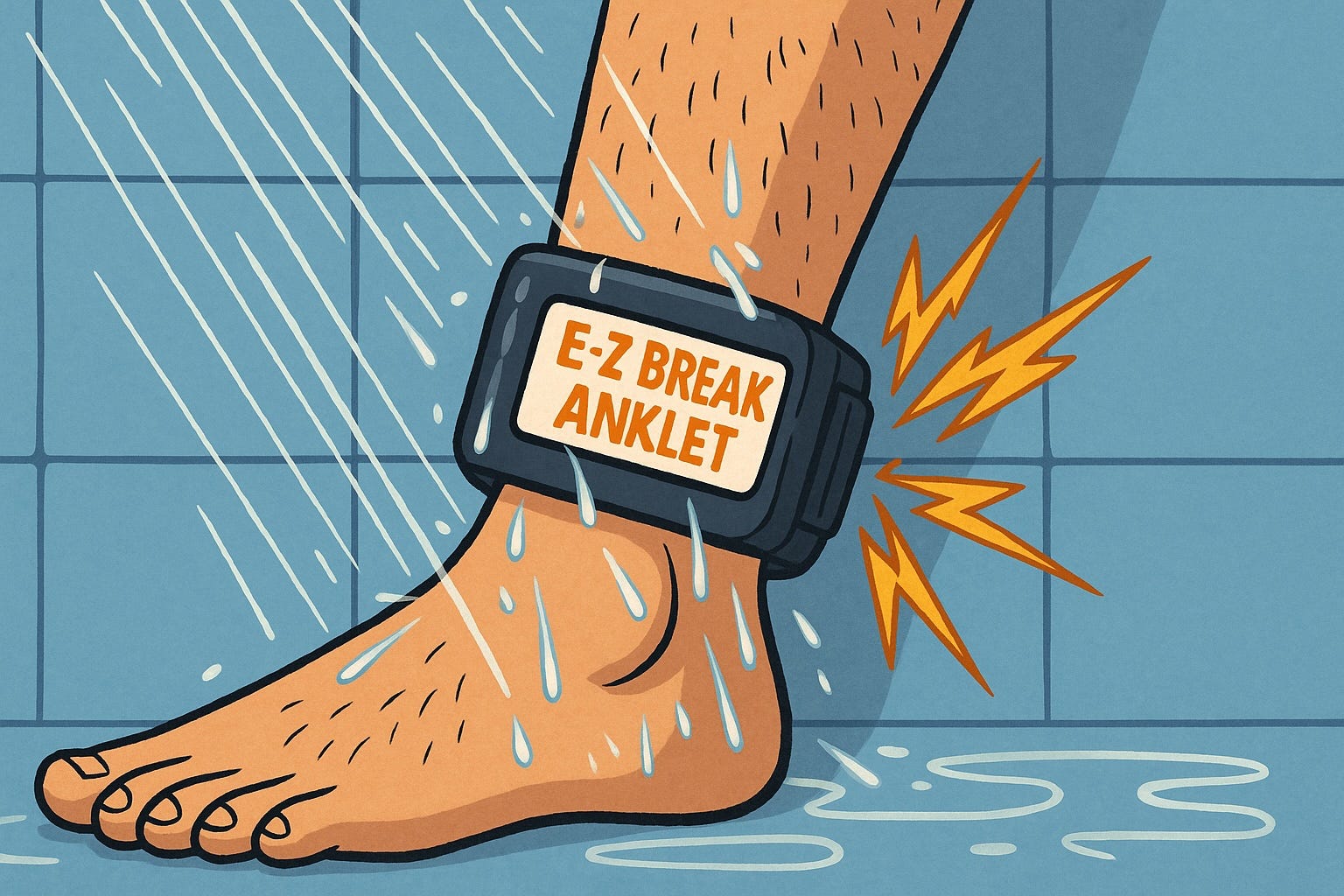
⛔️ Spain’s sexual abuser trackers fall down on the job
Spain’s prized system of electronic abuser bracelets — meant to protect women from violent ex-partners and sexual aggressors — isn’t looking so miraculous. A cascade of failures has revealed that the devices may not be as foolproof as the government claims, raising questions about whether thousands of women were really as safe as promised.
The cracks appear. The scandal broke last week when the Attorney General’s office flagged what it politely called a “minor technical glitch” in its annual report. In reality, it was closer to an eight-month blackout: between late 2023 and March 2024, courts lost access to historic location data showing whether aggressors had violated restraining orders.
The problem emerged during the switch in the management of Cometa, the central bracelet monitoring service, from Telefónica (subcontracted to Securitas) to a new joint venture between Vodafone and Securitas. In the handover, past records became inaccessible. That meant judges couldn’t check if abusers had breached their court-ordered limits, which was a nightmare for prosecutors, who were forced to shelve cases, suspend proceedings, or even watch aggressors walk (at least temporarily).
Poor design. Even before the migration, the Ministry of Equality had warned that the transition plan was “poorly designed, lacking resources, and inadequately detailed.” Afterward, judges discovered the data hole. For the AG’s office, the risk was obvious: a “potential lack of protection” for victims and a serious blow to the justice system. And the glitches didn’t stop there…
How they’re supposed to work. These bracelets, in use since 2009, are worn by men under restraining orders, either after conviction or while awaiting trial. The aggressor gets a device strapped to his ankle or wrist; the victim receives a special smartphone. If he comes within the forbidden perimeter — usually 500 meters — she’s alerted by sound, vibration, and a flashing screen, while Cometa is alerted too.
In theory, it’s a double safeguard: real-time protection plus a digital paper trail. The GPS logs become crucial evidence in court, proving when and where violations occurred. Judges can then impose harsher penalties, from fines to prison terms of six months to three years under Spain’s Penal Code.
More than 4,500 men currently wear the bracelets, and more than 21,000 women have been protected by them over 15 years. The government’s proudest talking point? Not one woman has been murdered while carrying the protective device.
What’s actually happening. Vodafone and the Equality Ministry have both admitted the new bracelets don’t even meet the government’s contract requirements. At a December 2024 meeting, officials conceded the devices weren’t waterproof (despite specifications), raising questions about how “tamper-proof” they really are.
Failures pile up. Some victims said their aggressors were able to turn off the bracelets easily; one even says her abuser did so and entered her house twice. And Cometa employees repeatedly warned the Ministry of Equality that the system was experiencing multiple failures.
Coverage gaps. Coverage is patchy in rural areas. Distance readings can fail in small towns. And Cometa struggles with the volume of alerts, forcing technicians to sift through false positives before deciding whether to escalate. In short, the firewall against abuse is full of holes.
He said/she said. The Ministry of Equality insists the crisis has been exaggerated. Minister Ana Redondo claims the blackout lasted only a few months, that the bracelets “worked at all times,” and that no woman was left unprotected or abuser freed. She argues that the only glitch was in retrieving past data — an issue Vodafone resolved by December 2024.
But prosecutors aren’t so sure. Their report notes cases suspended and evidence lost. And Vodafone itself hasn’t denied the specifications problems.
Enter the politics. Sensing blood, the center-right PP pounced. In Parliament on Tuesday, party leaders accused the government of abandoning vulnerable women and covering up a catastrophic failure. They demanded Redondo’s resignation.
You are a bad minister! By Wednesday afternoon, the opposition had the votes. Parliament formally censured the minister, 170–162, with 16 abstentions from Catalan separatists in ERC and Junts— two of PSOE’s supposed allies. For Sánchez’s fragile coalition, it was another reminder that it often can’t count on its “friends.”
Oh, Redondo didn’t leave her job, silly. No one ever resigns in Spain. The vote was just symbolic.
Why it matters. For victims, the bracelets were supposed to be a guarantee. For the government, they were a flagship policy. And now both are under question.
No blood, no foul? Spain’s government likes to say no woman has died in the program. That may still be true. But “alive” isn’t the same as “safe,” ya dig?
More news below. 👇👇
🔔 But first, check out our Instagram account
Want behind-the-scenes access to The Bubble? Ever wondered how we prep our newsletters, pick topics each week, or decide what makes the cut? Join our Close Friends list on Instagram for:
👀 Sneak peeks of events & podcasts
🗳️ Polls where you help us choose stories
🎤 Backstage moments with our editors
👉 Check out the Instagram post above to see how you can join The Bubble’s Close Friends list.
💬 Five things to discuss at dinner parties
1. 🥊 Everyone in politics is going on trial
Party time! The partner of Madrid’s regional presi, Isabel Díaz Ayuso, is heading to trial. A judge ruled Monday that Alberto González Amador will face charges of tax fraud, falsifying documents, accounting crimes, and belonging to a criminal organization. 😱
Recap. In 2023 Amador was accused of tax fraud and document forgery. Hacienda, Spain’s tax authority, says he defrauded over €350,000 in 2020–21 by using 15 fake invoices to cut his tax bill. Facing prison, Amador tried to cut a plea deal.
“Shell companies” is never a positive term. Amador, who worked as a middleman on medical gear sales during the pandemic, allegedly set up shell companies to generate fake expenses to lower his reported profits.
Heap long time! Prosecutors are seeking nearly four years in prison and fines, while parties Más Madrid and the PSOE, which filed parallel accusations against Amador, want up to five.
Ayuso Strikes Back. After a day of silence, Madrid’s dramatic leader came out swinging. She accused PM Sánchez’s government of timing the case to bury bad news about his own family (read below).
Seems suspicious. “Whenever there’s bad news about Sánchez’s circle, something similar suddenly appears on my side, like a mirror image,” Ayuso said, claiming the government “controls the headlines” to ensure her partner’s case gets top billing.
But wait, there’s more! As if one high-profile case wasn’t enough, Ayuso’s comments came just hours after it was confirmed that Sánchez’s brother, David Sánchez, would also stand trial for alleged influence peddling and corruption in Badajoz—accused of using his relationship with Mr. Handsome Sánchez to land a tailor-made government job.
And, and, and… Judge Juan Carlos Peinado also chose this week to send PM Sánchez’s wife to trial on charges of embezzlement. He has summoned Begoña Gómez to his court on Saturday so prosecutors can lay out details of the indictment. Peinado has had Gómez under investigation for nearly a year and a half and is following two lines of investigation:
You know who I am, right? One accuses her of using her status (again, her relationship with Mr. Handsome) to engage in influence peddling, misappropriation of funds, and other fun things in connection with her dealings with business leaders and Madrid’s Complutense University while running a master’s program at the school.
Who are you working for? The other asks whether public funds were embezzled through the hiring of an adviser at the presidential palace, who allegedly worked on Gómez’s private matters while on the state payroll.
Telenovela season. For now, all of these scandals are running in parallel—like competing soap operas—with Spain’s ruling party and opposition wielding them ahead of a tense political season and perhaps early elections. While the Sánchez family’s cases are politically toxic, the penalties facing González Amador are much more serious. 🚨
A sign that González Amador’s case might not be going so well? In true soap-opera fashion, Ayuso low-key distanced herself from her leading man, claiming she didn’t even know him when the alleged fraud took place.
2.💥 Sánchez’s migration deal with Junts goes down in flames

And now it’s dead. Pedro Sánchez’s carefully awkward network of allies fell apart spectacularly on Tuesday when Parliament rejected a bill that would have handed Catalonia control over immigration policy in the region, a key concession meant to keep the support of separatist party Junts (led by outlaw leader Carles Puigdemont).
The deal was the product of months of tense negotiations. Junts had demanded the transfer of migration powers in exchange for dropping a parliamentary move that could have forced Sánchez into a confidence vote earlier this year.
Saving us from them. Junts argued that controlling its borders (How?