

🇪🇺 Spain's Ceuta crisis rocks Brussels
Plus: Madrid's boring F1, the tragic story of a Spanish exchange student, and a killer clown.
Madrid | Issue #160 | The Bubble is Spain's #1 English-language newsletter. We offer paid and free subscriptions (which you can customize). For sponsorships, click here.
🇪🇺 The Ceuta crisis goes European
Oh boy! The whole Ceuta migrant “invasion” really isn’t just a Spanish issue anymore. Seven weeks later, the irregular arrival of some 70,000 aspiring immigrants into the Spanish enclave on the north coast of Africa has made its way to the heart of the European Union. And you know what it did there? It blew up.
Someone important is not happy. European Commission President Ursula von der Leyen used her annual State of the Union address to the European Parliament this week to propose a new framework that would let EU member states temporarily suspend the bloc’s asylum rules in migration emergencies.
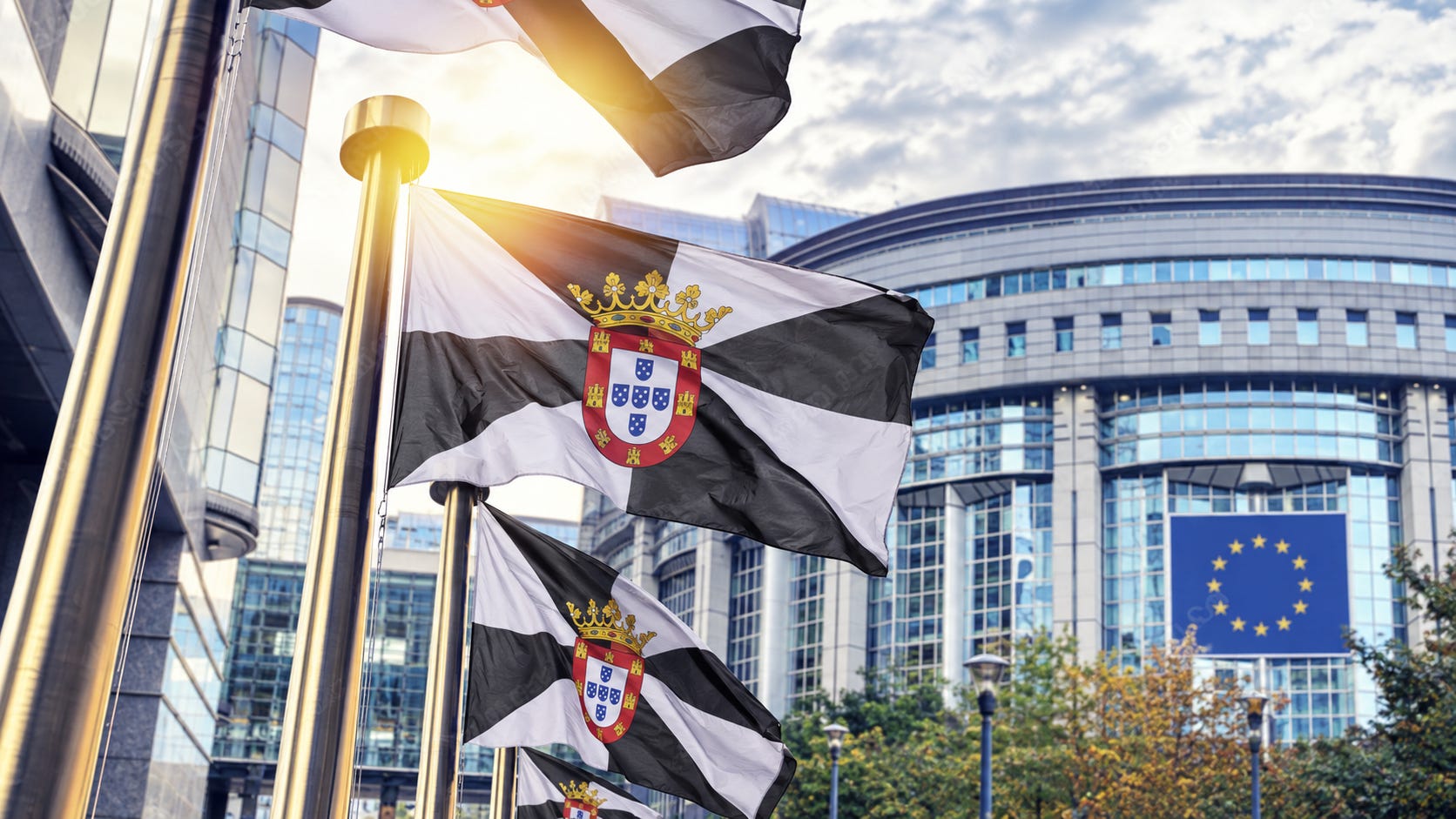
The catalyst, she made clear, was Ceuta. “The border of Ceuta is a European border,” VDL declared, with great solemnity, “because Ceuta is Spain, Ceuta is Europe — and Europe is there for you.”
This is a bigger deal than it might sound. The EU’s new Migration and Asylum Pact only entered into force in July, and VDL is already proposing an escape hatch from it. The new “emergency response framework” would let member states hit pause on asylum procedures to speed up deportations when things get out of hand.
Does VDL blame Morocco? She blamed trafficking mafias and unnamed EU “adversaries” for weaponizing vulnerable migrants against European borders — a reference to Russia and Belarus, who pulled exactly this stunt on the Polish and Lithuanian borders a few years back.
The implication was that Ceuta wasn’t just a humanitarian crisis. It was, at least in part, a geopolitical attack. She didn't blame Morocco (conspicuously), though VDL is part of the same political family as the PP, which blames center-left PM Pedro Sánchez — and Morocco — for the incursion.
Meanwhile, in Madrid… Sánchez and PP boss Alberto Núñez Feijóo are accusing each other of deliberately keeping the crisis alive (as you can see, nothing’s changed).
Feijóo says Morocco has offered to take migrants back and accuses Sánchez of “chronicling” the crisis by failing to process and return them quickly enough.
Sánchez threw the accusation straight back. He says the PP has floated breaking or suspending parts of the EU’s relationship with Morocco, but Morocco is precisely the country Spain needs to cooperate with to return the migrants. In Sánchez’s telling, blowing up that relationship wouldn’t solve Ceuta — it would make solving it harder.
Still stuck. In Ceuta, the regional government estimates that around 13,000 irregular migrants remain, although even the national government acknowledges nobody knows the exact number.
International whodunnit. The investigation into how this happened is getting serious, and the crisis has already claimed its first political victim: Gonzalo Sanz, chief of staff to the government’s representative in Ceuta, resigned after a spectacular dispute with his boss, Miguel Ángel Pérez Triano.
Whoopsie! An officer of the CNI (Spain’s intelligence agency) had warned Sanz on July 29 about social-media calls for a mass crossing the following day. Sanz says he passed the warning on. But Pérez Triano says he didn’t (or that they were “informal warnings” at best).
Nacional Court judge María Tardón now wants to hear it from Sanz herself. She’s summoned him to testify on Oct. 1, while Ceuta's regional president Juan Jesús Vivas will testify the day before about what authorities knew and why the response collapsed.
The Ceuta crisis even found its way onto the fútbol pitch. Several La Liga clubs — Villarreal, Betis, Elche, and Real Madrid — joined a solidarity campaign called “Todos Somos Caballas” (”We Are All Ceutans”), wearing t-shirts with the slogan before matches.
But then… Three Real Madrid players — Vinicius, Mbappé and Konaté — walked out on the pitch with the shirts half-folded, flashed them for approximately one second, and yanked them off. They gave no public explanation, but the club acknowledged their players have “personal sensitivities” about a campaign that some see as cover for anti-immigrant sentiment. (Mbappé later said, “I stand in full solidarity with Ceuta… But I also wanted to offer a gesture and a thought for all the migrants who have lost their lives..)
Angry face 😡! The right-leaning El Mundo was predictably incandescent and called it “treason,” demanded the three be expelled from the club immediately, and blamed “sanchismo.” Because Sánchez is apparently all-powerful, even though he can’t pass a law or budget to save his life.
Ay, por dios…
More news below. 👇👇

Are you an American living in Spain? You can vote in U.S. elections from here! If you’re an eligible U.S. citizen, request your ballot now at VoteFromAbroad.org and choose to receive it by email. Once it arrives, complete and return it promptly, following your state’s instructions and deadlines. Need help? The website offers state-by-state guidance and support from voter assistance volunteers. Request your ballot here.
🎙️ Episode 5 of The Bubble Podcast is out!
On our latest episode (recorded right before the Ceuta crisis), we discuss immigration, belonging, and identity in Spain with writer Noor Ammar Lamarty, ask whether the PP is moving closer to Vox ahead of the next election, and explore the TV shows, from Verano Azul to Sálvame, that help explain Spanish society.
Subscribe and listen on Spotify, Apple Podcasts, and YouTube!
💬 Five things to discuss at dinner parties
1. 🏎️ Madrid’s F1 comeback was a huge success! (Except for the race, which sucked)
Formula 1 returned to Madrid after 45 years last weekend, and by almost every measure the inaugural race at the new Madring (the Madrid ring, geddit?) was a success: packed stands, hundreds of thousands of visitors, non-stop press coverage and a massive economic boost for the capital. It all went great, except for one teeny, tiny, enormous problem: the actual race was incredibly boring.
First, the positive. Around 350,000 people attended (wow!) over the three-day weekend, with tickets sold out and hotel prices nearly 70% higher than during the same period last year.
Money, money, money. A PwC study commissioned before the race estimated that, after a €481.5m investment, it would generate €467m in economic activity, nearly 8,850 jobs and €83m in taxes and social security contributions (and this is just for the first year).
First of many. Madring has a 10-year contract running through 2035, making this a pretty big comeback for the capital.
But then, the race. Kimi Antonelli won the historic first race at Madring. Good for him. However, watching cars drive around in a line is apparently boring af.
Like watching paint dry. Sports media quickly moved to destroy the race, which produced only four overtakes in total (apparently that’s bad, not that we know). Even Monaco (basically the poster child for dull F1 races where nobody can pass anybody) managed 10 this year.
Madring’s tracks make it extremely difficult for a driver to pull alongside another and attack. Lando Norris (no f*cks given) elegantly said: “I don’t know how someone looks at this design and goes, 'Mint!’” Audi’s Gabriel Bortoleto said he “almost fell asleep” at the wheel. Yikes.
But fear not, F1 fan with disposable income! It seems much of the circuit is temporary, and organizers have already said they’re open to modifications before next year’s race.
Now add a little politics. Transport Minister and professional X (nee Twitter) troll Óscar Puente called the Grand Prix an “absolute turd dud,” and Madrid’s regional president Isabel Díaz Ayuso was not amused.
No, you! She said the event was a “total success” and accused Sánchez’s government of doing “everything possible to tarnish” the event because Madrid organized it.
Both things (a successful dud) can be true at the same time.
2. 😥 A Spanish exchange student is murdered in Mexico
It’s a parent’s greatest nightmare. Claudia Tacoronte, a 21-year-old from the Canary Islands who was studying childhood education at the University of Granada, was stabbed to death — apparently by a stranger — outside of the cultural center in Cuautla, in the Mexican state of Morelos.
Claudia had been in Mexico barely three weeks. On Saturday evening she traveled from Cuernavaca, where she was studying at the Universidad Autónoma del Estado de Morelos (UAEM), to attend a medicinal plants fair in Cuautla, 50 km away. Around 8:30 p.m., a man tried to snatch her phone. She ran. He chased her inside the building and stabbed her multiple times. The ambulance took half an hour to arrive, and she was already gone.
Paco is the main suspect. Security cameras caught a man in a white Under Armour shirt and dark backpack fleeing the scene at 8:50 p.m. Neighbors identified him as “Paco,” a local thief who had been caught on camera stealing a bicycle the same day. He remains at large. The Morelos prosecutor’s office is investigating under a femicide protocol, though robbery remains the leading hypothesis.
Why no warning? Claudia’s sister posted a video that has been viewed more than half a million times, asking a question that has reverberated across Spain: why did no one warn Claudia or her family that three other students from the same university had been murdered in the previous seven months?