

📵 Spain moves to ban kids from the socials
Also: Breakthrough science and Spain's chapter in the Epstein files.
Madrid | Issue #135
🇪🇸 The Bubble is Spain's #1 English-language, best-selling newsletter. We offer paid subscriptions, and we’d be thrilled to have your support!
🚨 Customize your subscription! You can personalize your Bubble experience so you only get the emails you want—and never the ones you don’t. Click here to learn how.
📺 Sponsorship opportunities. Want to get your brand in front of our engaged and influential audience of professionals, creatives, and government workers? We’re now offering a variety of ways to do so. Click here to find out how and book a spot.
Try a book for a change
🤳 No TikTok for you, chaval!
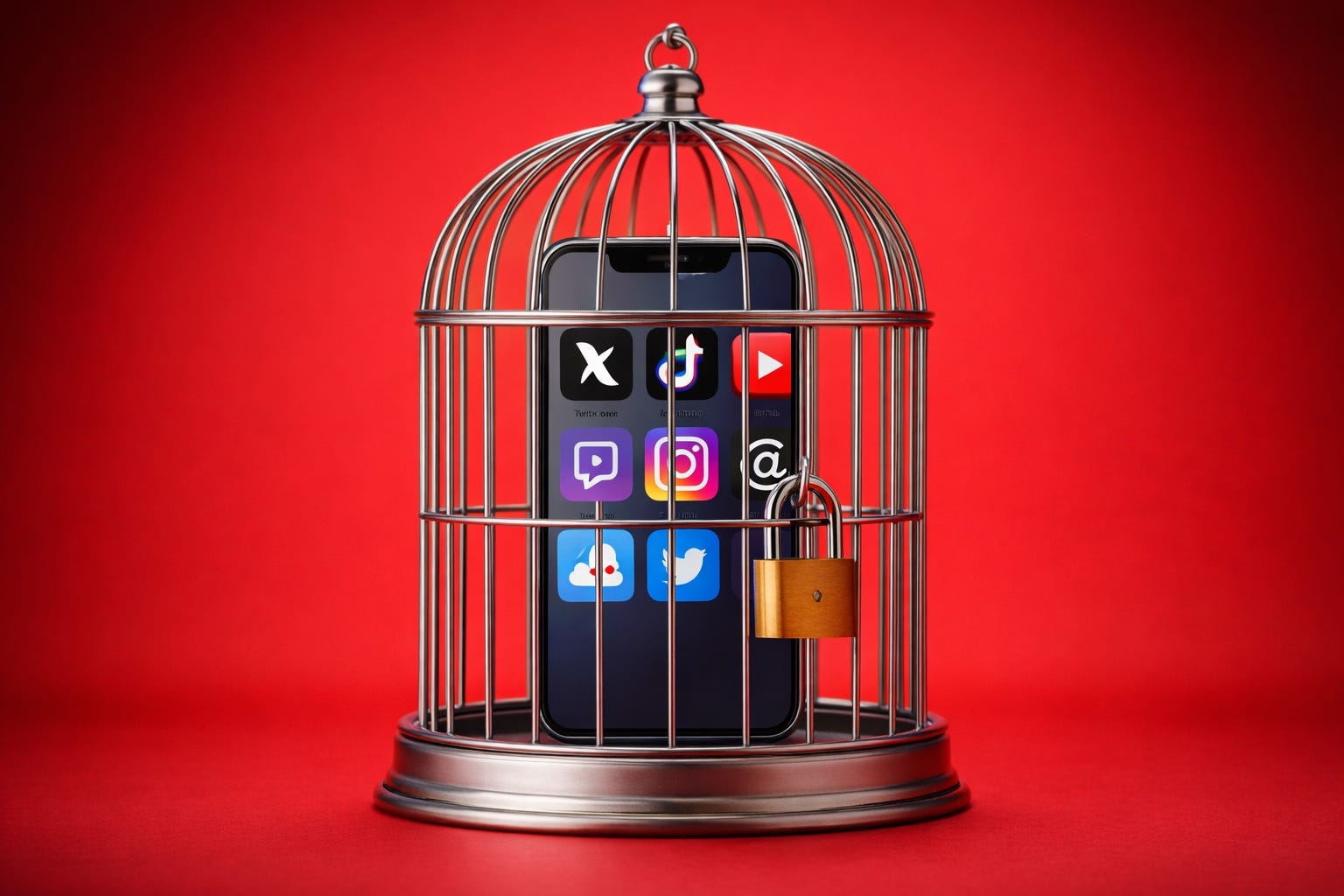
Move over, France and Australia! Prime Minister Pedro Sánchez needs a distraction win, so he has gone full sheriff on what he calls the “digital Wild West” and announced that Spain will ban minors under 16 from social media, forcing platforms like TikTok, Instagram, and X to implement effective age-verification systems.
The news. Speaking Tuesday at the World Governments Summit in Dubai, Sánchez announced a package of five measures to regulate social media, including the ban on minors.
David, meet Goliath. Sánchez said the move targets Big Tech’s unchecked power, arguing that social networks have become a lawless “failed state” where hate speech, disinformation, harassment — even crimes — thrive. These companies, he warned, are now “richer and more powerful than many countries” (Spain included), with a dangerously outsized influence on society — especially on young people. (And honestly? On the kids part, he’s not wrong.)
Not really new, though. Back in 2024, Spain’s cabinet already approved a draft bill that proposed raising the minimum age for opening a social media account from 14 to 16, and it’s currently making its way through Parliament.
One step beyond. But Sánchez now wants to go further by inserting an explicit ban directly into that legislation and force platforms to implement enforceable age-verification systems to make the rule actually work. (He also wants you focused on the ban, not his party’s corruption scandals. But anyway…)
Eyebrows raised. Sánchez is pushing beyond regulation and into criminal law, with tech bros executives facing criminal liability if illegal or hateful content isn’t removed.
New crime. Spain would also define “algorithm manipulation” as a crime when platforms deliberately amplify illegal content or disinformation for profit.
We will control all that you see and hear. The government also wants a system to quantify and trace what Sánchez called the “fingerprint of hate and polarization”. The goal is to measure how platforms fuel division and toxic content and eventually use that data as the basis for sanctions. If you think this sounds eerily like censorship, you’re not alone. Some experts aren’t happy with this and call it “dangerous” because it could be used to clamp down on political dissidence.
You know who else isn’t happy? Europe. EU representatives told El Mundo that under the bloc’s Digital Services Act, Spain can set its own minimum age, but it cannot impose extra obligations or criminal liability that go beyond EU law — like jailing Elon Musk for lying.
What’s next? The big question is how any of this will actually work. Normally, Sánchez doesn’t command the votes to pass anything, but the PP has supported age limits, so that might not be a problem. If it were to pass, then comes another hurdle: the technical side is pretty messy.
What counts as a social network? YouTube is apparently included. WhatsApp is not, since it’s classified as messaging.
And how do you verify age without creating a surveillance state? Digital ID? Third-party certification? Facial recognition? Even experts aren’t sure what model Spain will land on. (In theory, the EU Digital Identity Wallet, due to be rolled out for all residents by the end of 2026, will provide a way to prove age.)
Here comes the opposition. Hint: People complained.
Dude, that was mine. PP boss Alberto Núñez Feijóo accused Sánchez of stealing their idea, claiming conservatives proposed similar restrictions first and joking the government should “pay the copyright.” (Boomer humor.)
And from the peanut gallery. Vox, meanwhile, went full Vox: Santiago Abascal mocked both PSOE and PP for fighting over “the patronage of censorship” and accused Sánchez of authoritarianism (no surprise that far-right Vox would stand up for the youths, given its popularity with young voters).
Enter the tech bros. Elon Musk, never one to miss an opportunity for feigning outrage on X, called Sánchez a “tyrant” and a “traitor”.
“The Telegram Guy.” Then there was Telegram founder Pavel Durov, known for fathering over 100 children, who used his platform to warn all Spaniards to stay “vigilant,” suggesting that Spain could become a monitored state under the pretext of child protection.
Bonus Cervantes reference! Sánchez responded last night on Twitter, saying: “Let the techno-oligarchs bark, Sancho, it’s a sign that we are riding on.” (That’s a variation of a quote falsely attributed to Don Quixote that’s used to say that if people are complaining, it means that you’re making progress.)
Stop freaking out. Sánchez insists this isn’t censorship, it’s governance. (Subtle difference, sometimes.) He also announced that Spain is teaming up with five other European countries in a “coalition of the digitally willing” (we don’t know who they are, but maybe Portugal?) to push stricter regulation, arguing this battle can’t be fought by one country alone.
Dunno, but the last time Spain joined a Coalition of the Willing… (paging Iraq).
More news below. 👇👇
🔔 Don’t forget to follow us on Instagram!
If you’re not following us on Instagram yet, you’re missing out. We’re posting exclusive content with our collaborators across Spain, breaking news updates, and pop culture coverage. Click on the post above and come hang with us!
💬 Five things to discuss at dinner parties
1. 🧪 Why top American scientists are choosing Spain
Spain has been busy recruiting top global scientific talent and it would like to thank that angry orange guy President Donald Trump for making it easier. The government has just confirmed that its flagship ATRAE program has put €38.9 million into recruiting 37 senior researchers with international profiles, and more than 80% of them are coming from abroad.
Merkins. Twelve of them are American, and in a striking detail, 56.7% of all selected scientists currently work at U.S. research centers. Which suggests that Trumpland’s attacks on research funding may not be a big selling point.
Operación clip. Spain is not just attracting foreigners (we do that all the time) but rather pulling a reverse Operation Paperclip and recruiting people out of the world’s most powerful science ecosystem. As they say, the U.S. is the new Germany.
Show us the 💰. Each researcher will receive around €1 million on average to set up a lab, build a team, and get to work in Spain, with more than half of them landing €1.1 million.
Those coming specifically from the U.S.
escaping the Orange Menaceget an extra €200,000 on top. The funding runs for three to four years, and host institutions (universities, the CSIC, or other research centers) are required to offer job stabilization once the program ends. So it’s not a visiting fellowship, it’s pretty much a relocation package.
Democracy is cool here. Science Minister Diana Morant hasn’t been shy about the political framing. She’s described Spain as a “refuge of democratic and scientific values” at a moment when other countries are cutting science budgets, censoring research lines, and rolling back programs tied to climate and other awkward subjects.
That message lands particularly hard in the U.S., where aggressive cuts and political pressure on universities have pushed many researchers to look for an exit. A Nature survey last year found that up to 75% of U.S. scientists had considered leaving.
Why this matters. It’s the first time in ATRAE’s three editions that international scientists massively outnumber Spanish ones. In 2023, not a single American applied. In 2024, they were 16% of the cohort. Now they’re nearly a third, and the biggest single national group.
The researchers recruited will work across health, climate, food systems, advanced materials, digital tech, space sciences, and social sciences, with two-thirds spread across Catalonia and Madrid, and the rest going to Murcia, Galicia, the Basque Country, Valencia, and Andalucía.
These scientists are expected to train PhD students, hire postdocs, attract EU grants, raise the profile of Spanish research (which already has been making the news this week), and reposition the country as a serious scientific destination (something that until now has not been easy). Oh, and learn how to make a properly runny tortilla.
2. 🏥 Face/On at Barcelona’s Vall d’Hebron hospital
While we’re talking about Spain being better at cutting-edge science than it lets on, here’s another subject for your dinner-party arsenal: Barcelona’s Hospital Vall d’Hebron is one of the world’s undisputed pioneers in face transplants. Yes, those face transplants, like from that John Travolta-swaps-faces-with-Nicolas Cage movie (google it, kids!) but the real “this changes a life forever” kind. And now, they’ve got an extraordinary (literally, beyond ordinary) new “first” to brag about.
The subject. Carme (no apellido, by choice) lost the central part of her face after a bacterial infection caused catastrophic tissue necrosis, which is seriously gross. She couldn’t eat properly, struggled to breathe, and stopped leaving her house altogether.
The reveal. Then, four months ago, Vall d’Hebron performed a highly complex partial face transplant that restored basic functions — speech, eating, breathing, sensation — and, slowly, a sense of self.
Here’s the medical-history footnote bit. The donor was a woman who had opted for euthanasia and explicitly chose to donate her face. It’s the first time anywhere in the world that a facial transplant has been carried out using tissue from a donor who received assisted dying. So, like, medicine meets an almost uncomfortable level of generosity.
This for us is a big step forward from the old process. You know, performing experimental surgery where they literally remove Cage’s face and graft it onto Travolta, including skin, muscle, and apparently… the entire shape of the head; or buying a person from one of those “human farms” in Andorra. (Oh, wait, we’re definitely not meant to make jokes here. Note to self.)
But seriously, face transplants themselves are still rare and pretty damn impressive. Since the first one was performed 20 years ago — a partial transplant on Isabelle Dinoire in Amiens, France — just 54 have been carried out worldwide. Spain accounts for six. Vall d’Hebron alone has done three. ❤️🔥
Hitting the big time. In 2010, the Barcelona hospital made global headlines by performing the world’s first full face transplant. In 2015, it pulled off another first, using a donor in controlled cardiac death. This latest case adds a new chapter to a field that is still considered experimental, controversial, and ethically delicate — but also transformative for patients’ lives in the most intense way.
These surgeries are marathon affairs. They take 15 to 24 hours, and involve around 100 professionals (no amateurs!), and the transplantation of skin, muscle, nerves, bone, and blood vessels using ultra-fine micro-surgery. The goal isn’t cosmetic. In the words of Dr. Joan-Pere Barrets, the surgeon who led Carme’s procedure, “A face that doesn’t move or feel is nothing more than a mask.”
A new life. Carme now drinks coffee, talks, laughs (she says it still sounds a bit strange), and goes out without fear. “Every day I look in the mirror,” she says, “and tell myself I look more and more like me.”
3. ⛔ Jeffrey Epstein really loved Barcelona
Spain is so great that pretty much everyone falls in love on a good visit. And that includes bad people. Like really, really bad people. Jeffrey Epstein-level bad. Actually, the disgraced financier and convicted sex offender™ himself loved Barcelona. For the marisquerías. And, according to the newly unsealed U.S. Justice Department Epstein Files database, for the girls he found there.
A lot of them. But more on that in a sec.
We have a match (or many). When the Epstein Files were dumped online last week, internet Clouseaus sleuths with an interest in the Ciudad Condal noticed that if you searched the database for “Barcelona”, you got more than 1,100 hits. 🤔
Jeffrey’s happy place. You see, after a 2009 visit, the Catalan capital became one of Epstein’s favorite European pit stops — a place he described in emails as “fun,” and later, more memorably, as a city whose “moans” he could still hear days later while sitting in Dubai.
Yes. Gross.
Epstein’s Barcelona years follow a familiar pattern. He flew in regularly, stayed in luxury hotels (by 2018, he was asking to be booked only at the Hotel W Barcelona, natch), and ate his way through the city’s greatest hits: Bocanegra, Elsa y Fred, Flax & Kale (okay, maybe not a greatest hit), Soho House, Ohla’s terrace. (Rope bondage classes were mentioned, too.)
And there was culture too! There’s a Picasso Museum charge among his receipts, presumably squeezed in between oysters and… networking.
Yeah, networking. For good old Jeff, Barcelona wasn’t just a food-and-fun stop. It was operational.
Epstein signed up at IQ Elite, a Barcelona-based dating agency on Gran de Gràcia dedicated to matching “intelligent, sophisticated singles.” This was very on-brand. In the U.S., Epstein notoriously posed as a benefactor offering mentorship and education. Because posing as a disgraced financier and convicted sex offender™ is not a good look.
And then there’s the “assistant”. At one point, emails show Epstein was arranging to fly a “possible new assistant” from Barcelona to Miami in early 2017. Her paperwork was handled, and ESTA forms were filled out. His assistant and pilot coordinated the invite. What happened next is unclear. We shudder to think.
And now the even sleezier part. Epstein had a local fixer.
Enter Daniel Siad, a Paris-based photographer and self-styled model scout who relocated to Barcelona around 2016. His job, according to messages, was simple: find young women, photograph them, send Epstein the images, report back. Siad bragged about having “models camping” in his 35m2 flat (which is crazy small for a campout, no?), praised Barcelona as “much safer than Paris” for his sleazy work with Epstein, and ran rolling castings.
Epstein reviewed photos. He asked about the ages of the models, whether they looked younger, paid some, made sorta grody demands for more explicit material a la “could you move the camera lower so I can see between your legs,” and seems to have had sex with a few. Like we said. Gross.
Barcelona was not the only apple in Epstein’s eye! During his Spain tours, Epstein took a liking to real estate and, in 2016, inquired about buying a famed Mallorca estate: Michael Douglas’s finca, s’Estaca. 🤦
4. 🏈 The NFL ♥️ Madrid
Remember when the NFL came to town in November? Close to 80,000 people packed the Bernabéu stadium to watch two mediocre 3-7 teams (at least according to the only person in The Bubble’s newsroom that follows American football) play a sport that few of those in the stands understood, while chaos reigned outside, with cheerleaders, live bands, and Dolphins dancers competing with flamenco performers (⁉️).
The Americans in attendance? They drank the Bernabéu dry, with beer and food running out at several stands (“They weren’t ready for how much we consume,” an American fan named Jack explained, helpfully).
And you know what? Everybody had a fantastic time. So much so that even before the game, NFL Commissioner Roger Goodell told Spanish media, “We will be back, we are excited.” ✳️ (more below)
Roger did not lie. The NFL, along with Real Madrid and city and regional governments announced Monday that the NFL would be playing another game in the Bernabéu in 2026 as part of a multiyear deal that seems to include a game there in 2027 as well (as yet unannounced). The Chicago Bears are supposed to be one of the teams this year, and the Kansas City Chiefs in 2027.
Will there be any games left in the U.S.?! The Madrid game is part of the NFL’s expansion strategy, which during the 2026/7 season will also include games in Melbourne, Rio de Janeiro, London, and Munich. Dublin and Mexico City are expected to be added too, pending confirmation.
We are looking forward to the new tradition. We plan to be there like last year, interviewing some of the players beforehand about what they think of Madrid and why it’s called football when it's mostly played with their hands. Though this year, we wouldn’t mind a few tickets to the actual game. Remember us, eh, Isa, Pepito?
✳️ Roger Goodell has said others things too. Like on Monday, the day the NFL announced the new Madrid games, he was definitely less excited to tell reporters the league would “absolutely” be looking into the communications between New York Giants co-owner Steve Tisch and Jeffrey Epstein, after Tisch’s name appeared in the recent dump of the Epstein files a reported 440+ times. Epstein apparently, um, contacted women for Tisch. We’ll leave it at that.
5. 🏌️ That Seve Ballesteros mystery you didn’t know about has been solved
If you’re not Spanish, a golfer, or Gen X (or older), there’s a decent chance the name Seve Ballesteros doesn’t immediately ring a bell. So, a quick primer. Seve — full name Severiano — was Spain’s first global golf superstar: a former world No. 1, winner of 90 international tournaments, including five majors, and the man who made golf feel rebellious, creative, and slightly dangerous. In Spain, he was basically the Rafa Nadal of golf. He died in 2011, aged just 54, after a long fight with brain cancer.
Things got awkward earlier this month in Pedreña, his tiny Cantabrian hometown of 1,300 people.
Where’s Seve? Sometime between Jan. 18 and 19, a life-size bronze statue of Seve — frozen mid-celebration after his iconic 1984 Open win at St Andrews — vanished from the park beside the golf club where he learned how to play. Not toppled. Not vandalized. Just gone. Cue “indignation, disbelief, and sadness,” in the words of the mayor.
The theory from day one was theft. The statue weighed over 100 kilos and was worth about €30,000 — though its sentimental value was far higher. Police suspected the worst — that it had been stolen for scrap, chopped up, and sold off as bronze (value: about €400).
Which, sadly, turned out to be almost exactly right.
Last week, the Guardia Civil found Seve in pieces in a storage unit in Santander, cut cleanly at the waist, arms broken off, ready to be sold to metal recyclers. A 22-year-old man with a record for copper theft was arrested, and investigators aren’t ruling out accomplices. (Because, again, bronze Seve weighed 100 kilos.)
The good news? Seve will rise again.
The statue’s sculptor, Salvador García Ceballos, says Seve can be restored. Slowly, painstakingly, using the original molds, fitting the pieces back together “like a puzzle.” Some parts will need to be re-cast. Others can be saved. It won’t be quick.
But it will be Seve. That is, in bronze.
🙏 Once again, please remember to share this newsletter with your friends on social media. The more we grow, the more information we’ll be able to offer each week.