

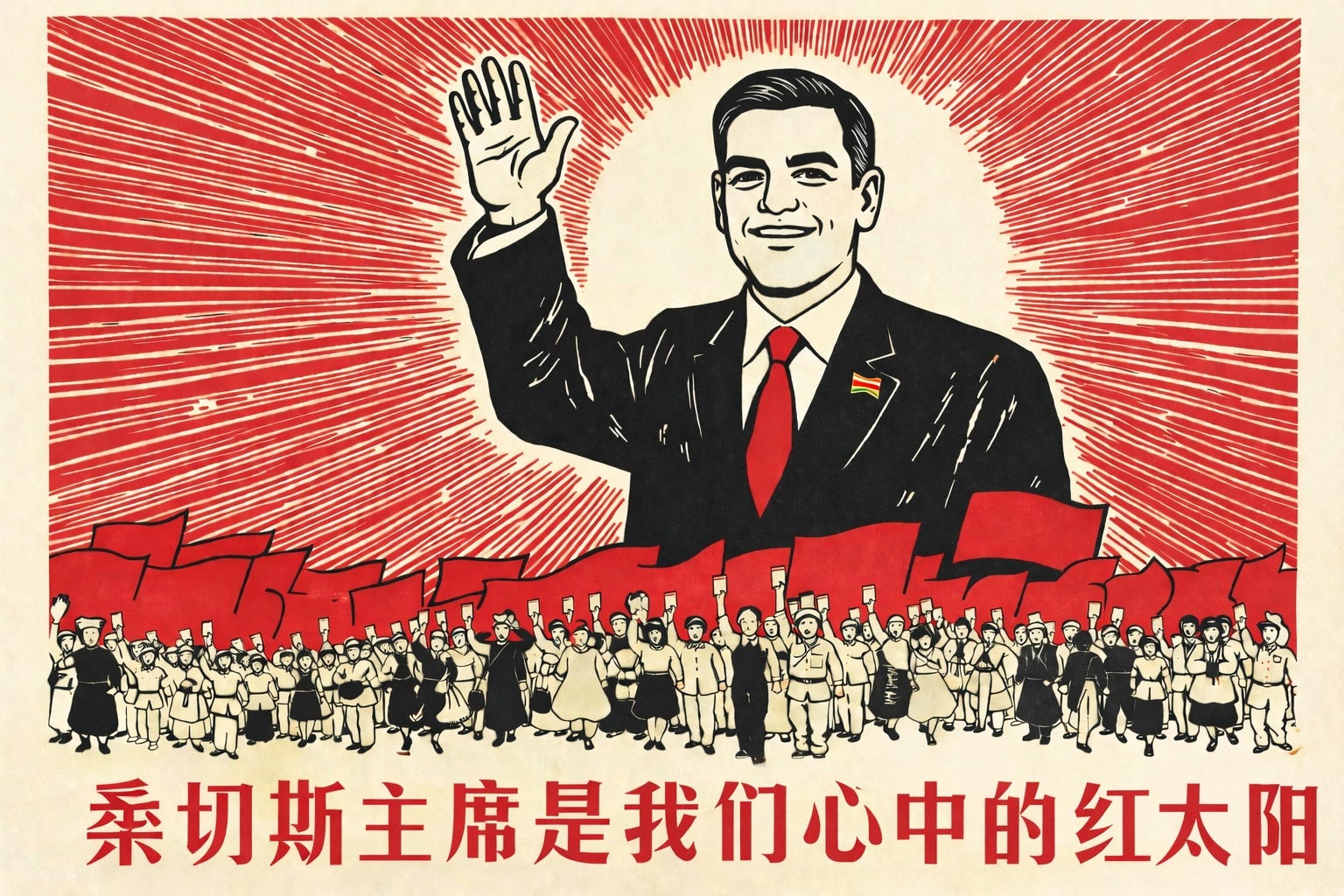
🇨🇳 Pedro Sánchez, China's favorite European
Plus: That big immigrant regularization, Pope visit friction...and Los Javis in Cannes!
Madrid | Issue #143
🇪🇸 The Bubble is Spain's #1 English-language, best-selling newsletter. We offer paid subscriptions, and we’d be thrilled to have your support!
🚨 Customize your subscription! You can personalize your Bubble experience so you only get the emails you want—and never the ones you don’t. Click here to learn how.
📺 Sponsorship opportunities. Want to get your brand in front of our engaged and influential audience of professionals, creatives, and government workers? We’re now offering a variety of ways to do so. Click here to find out how and book a spot.
Grab the popcorn
🇨🇳 Sánchez visits China again. And again.
Back in town. Prime Minister Pedro Sánchez is back in Beijing. Again. But this time, the context couldn’t be more, ahem, loaded. As Spain’s relationship with the U.S. continues to sour over the war in Iran and broader geopolitical tensions, the PM has doubled down on a different strategy: strengthening ties with China and positioning Spain as a key player in a rapidly shifting global order.
Hold on to your butts. This is Sánchez’s fourth trip to China in just over three years, a pace of diplomatic courtship that would be eyebrow-raising in normal times. Over a packed few days, he delivered a major speech at the “Harvard of the Communist Party”, met with President Xi Jinping at the Great Hall of the People, signed cooperation agreements with Prime Minister Li Qiang, and toured tech giant Xiaomi (because apparently no trip to China is complete without touring a tech campus and pretending you understand the supply chain).
A busy agenda. Officially, Sánchez’s visit was about strengthening economic ties, attracting Chinese investment, and boosting Spanish exports, especially in sectors like agriculture, infrastructure, and green technology.
Spain, like much of Europe, depends on China for key materials and renewable tech. But politically, this trip is about something bigger: positioning Spain as a “middle power” that can operate beyond the traditional U.S.-EU axis, especially at a time when Washington is increasingly unpredictable.
Not a one-off. Spain has quietly become one of the most China-friendly countries in the EU. While others in Europe flirt with a tougher stance, Sánchez has leaned into engagement, even as critics warn the relationship is deeply unbalanced, with China dominating trade. However, Madrid sees Beijing as both an economic opportunity and a geopolitical necessity.
In Beijing, Sánchez didn’t hold back — well, at least not entirely. He called on Beijing to “do more” to uphold international law and help end conflicts from Gaza to Ukraine.
He also delivered a message on trade: Europe has opened up, and now it’s China’s turn. “We need China to open up so Europe doesn’t have to close itself,” he said, calling the current trade deficit “unsustainable.”
Really, Spain needs a trade upgrade. Spain’s trade deficit with China jumped to €42bn last year — accounting for 74% of Spain's total deficit. A central aim of the visit was to sign a High Quality Investment Agreement that, Bloomberg notes, aims to ensure that Chinese investments in Spain involve technology transfers to local companies, contracts for local suppliers, and jobs for locals. (🤞 on that.)
BFFs 4 ever. The real headline came in his meeting with Xi. Without naming Trump, both leaders took aim at what they see as a world drifting toward unilateralism, or, as Xi put it, “the law of the jungle.”
Sánchez echoed that language, pushing for a stronger multilateral system where the EU and China cooperate to ease global tensions.
Sánchez’s outspoken “No to war” stance, especially his refusal to support U.S. military operations in Iran, has made him something of an unlikely hero in China.
Chinese officials and media have praised his position, portraying him as a leader willing to stand up to Washington and as being on the “right side of history”. More importantly, Beijing increasingly sees him as a bridge between China and Brussels (a role that, notably, parts of the EU now seem to support).
Sánchez is trying to redefine Spain’s place in the world, somewhere between Brussels, Washington, and Beijing — and a lot closer to the latter. Whether this is visionary or reckless probably depends on how the next six months of global trade politics (and the Orange Menace's whims) unfold.
More news below. 👇👇
🔔 But first, check out our sponsor — Bureaucracy.es

We’ve teamed up with our friends at Bureaucracy.es to bring you more resources about immigration and life in Spain. Check out our guides on how to get a Spanish Digital Nomad Visa or Non-Lucrative Visa.
If you’d like their help with the paperwork to apply for these visas, or need someone to guide you through the Spanish citizenship application process, you can hire them using this link (and, in the spirit of full transparency with our subscribers, The Bubble will receive a small commission).
💬 Five things to discuss at dinner parties
1. 🛂 The government fired the starting gun on its massive immigrant regularization — and it’s already got troubles
Spain’s “Give me your tired, your poor, your huddled masses” moment is finally here. On Tuesday, the PSOE-led coalition approved a royal decree that will regularize an estimated 500,000 undocumented immigrants.
We covered the mechanics in depth when the first draft dropped, so here’s the short version. Think tank Funcas estimates there are 840,000 undocumented immigrants in Spain; to qualify, you need to have lived here for at least five months as of Dec. 31, 2025, and have a clean record; and the application window runs until June 30. (Read this if you want more.)
Now, the fun part. The decree was pushed through as a real decreto rather than a real decreto-ley — a crucial distinction, because the latter requires congressional ratification within 30 days, while the former bypasses parliament entirely. No debate, no opposition input, no vote. It’s essentially payment to hard-left Podemos for support on other issues — and the reason the opposition is heading straight to the Supreme Court.
Politics first. You will not be shocked to learn that Vox hates it, and that the PP feels obliged to perform outrage lest Vox hoover up its voters.
PP boss Alberto Núñez Feijóo said “immigration in bulk” (as opposed to case-by-case) “has no precedent in any European country” and could become “the gateway for illegality.”
Madrid’s Isabel Díaz Ayuso announced she’d appeal to the Supreme Court over the supposedly catastrophic effects on public services. (Worth noting: both PP and PSOE governments have done big regularizations before, with no sudden service collapse to speak of.)
Vox’s Santiago Abascal went ominous on X, writing, “The people won’t forgive you. Sooner or later you’ll have to pay for it.” His party also said it would appeal to the Supreme Court.
Then there’s the fine print. El Consejo de Estado — the advisory body that checks legislation for constitutional compliance — found plenty to complain about.
The most eyebrow-raising problem with the original draft? It let applicants self-certify that they had no criminal record. As in, “Trust me.” (A bit of an oversight!) The government has since amended this to require a police report; if an applicant’s home country is slow to provide one, Spain will follow up through diplomatic channels. Problem solved, technically.
And pity the poor bureaucrats. Half a million new applications are incoming, with no meaningful increase in the number of people to process them. Immigration officers across Spain have threatened to strike starting April 21 — the day after in-person appointments open — arguing the system simply isn’t ready for the flood.
Our take? It’s a messy law, rushed through with minimal debate. But getting half a million people out of the shadows — where they are routinely exploited — is a good thing. (Sánchez’s own defense of the decree is here.)
2. ⚖️ PM Sánchez’s wife faces four charges and is on the brink of trial
Here we go. The investigation into PM Sánchez’s wife, Begoña Gómez, has taken a decisive turn. After two years of legal drama, Judge Juan Carlos Peinado has formally proposed sending her to trial — in Spanish legal terms, the step right before oral proceedings begin.
4 crimes. In a 39-page ruling, he argues there are sufficient indications to charge her with four crimes: influence peddling, corruption in business, embezzlement of public funds, and misappropriation of a trademark. (One earlier accusation, professional misconduct, has been dropped).
Wait… how did we get here? The case dates back to April 2024, when a complaint was filed by the pseudo-union Manos Limpias, a far-right organization known for filing politically charged lawsuits that usually end in nothing.
That initial complaint snowballed, with additional accusations from hard-right groups like Hazte Oír and Vox turning what started as a fringe legal move into a full-blown political and judicial saga.
At the center of it all is Judge Peinado himself, who has become almost as controversial as the case. His investigation has been repeatedly corrected by higher courts, including the Audiencia Provincial, which has overturned several of his decisions and limited the scope of the case.
He has attempted to expand the investigation in multiple directions — from Air Europa’s bailout to implicating ministers — mostly without success. Add unusually political language in his rulings (including comparisons of the Sánchez government to “absolutist regimes”), and you get a judge who has become part of the story.