

Skip to content
Madrid

đŸ‡ș🇳 Mr. SĂĄnchez Goes to New York

Plus: An 87-year-old lady is evicted, Ceuta stays hot, and Spain finds another Roman theater.

Madrid | Issue #161 | The Bubble is Spain's #1 English-language newsletter. We offer paid and free subscriptions (which you can customize). For sponsorships, click here.

Subscribe now


đŸ‡ȘđŸ‡ș The Big Apple is Mr. Handsome's happy place

Never has Prime Minister Pedro SĂĄnchez (aka Mr. Handsome) been so happy to leave Spain behind. And who could blame him?

  • His unhappy place. Here, he faces a paralyzed parliament, constant criticism over his handling of the migrant crisis in Ceuta (see below 👇), and a whole lot else: a raft of corruption cases targeting his colleagues and family, and upcoming elections that are likely to wipe out his government.

  • His happy place. But at the U.N. General Assembly in New York, where he is now, he can expect to be fĂȘted as an international leader of the progressive left who makes principled stands for Gaza and against Israel and the 🍊 Menace (aka Donald J. Trump).

(Think USSR boss Mikhail Gorbachev in 1990, loathed at home and loved abroad.)

So how's it going? To be honest, the trip's turned out pretty much as he hoped so far.

  • Exhibit #1: He got to pass on meeting with Trump. He skipped the U.S. presi's reception for world leaders on Tuesday night, with government spokesperson Elma Saiz saying that SĂĄnchez couldn't attend, “basically because the invitation arrived only recently, when the entire trip had already been planned.” There was nothing on SĂĄnchez's official agenda at the time of Trump's party, but maybe he had a private meeting? (Also, he didn't go last year — King F6 did.) Or maybe he was taping a podcast? đŸ€”

  • Exhibit #2: He got to do Jon Stewart's show. The first event on SĂĄnchez's agenda the next day was the broadcast of his taped visit to the podcast “The Weekly Show" (we’re big fans, Jon!), where he gently mocked the 🍊's "very ideological” speech at the U.N. (you know, the one where Trump threatened to annihilate Iran?), which he noted to Jon's laughter was “not supported by facts and data.”

    • Also with Jon
 SĂĄnchez showed his full-throated support for “inclusive and universal multilateralism”, and chastised permanent members of the U.N. Security Council that are violating international law (here's looking at you, Russia and the U.S.). Jon agreed (and we can't say we didn't).

  • Exhibit #3: He got to hang with Zohran Mamdani. The next event on Mr. Handsome’s agenda? The role of special guest at a meeting of left-leaning leaders held by New York's surprisingly popular democratic-socialist mayor, who, El Español assures us all, fascinates SĂĄnchez because he is “multicultural, interventionist, an influencer, photogenic, and ‘very cool.’”

    • Mamdani was nice. He held out SĂĄnchez's government as an example: “A commitment to the dignity of workers guides all of us here this morning, and it has also guided the work of Prime Minister SĂĄnchez,” he said, signaling out Spain's extended paternity and maternity leave, ban on conversion therapies for LGBTQ+ folks, and tributes to the victims of Franco’s regime.

  • Exhibit #4: He got to speak at the U.N. At his speech this morning (yes, we stayed up), he drew a contrast between Spain and the global rise of nationalism. Pointing to Ceuta, he promised Spain would overcome the migration crisis without “turning migrants into enemies,” breaking the law, or abandoning human rights.

    • He used his favorite lines. He also attacked what he called the “selfishness, ignorance and cruelty” of reactionary governments and “tech oligarchs,” defended international cooperation, and called on progressives not to lose hope in a clearly political speech ahead of Spain’s next general election.

But it wasn't all great, especially at home. Venezuela's (Trump-appointed) leader Delcy Rodríguez went out of her way on Tuesday to find Sánchez at the U.N. assembly, where they kissed hello, and she asked him to keep talking about Venezuela’s political future.

  • Long time no see! The exchange only lasted 30 seconds, but SĂĄnchez told her Spain wants to keep the channel open. It was their first face-to-face encounter since the kidnapping capture of Delcy's boss, NicolĂĄs Maduro, in January.

  • Awkward. RodrĂ­guez sparked the Delcygate scandal in 2020 when she landed in Madrid despite EU travel restrictions for being, um, part of a corrupt dictatorship, and met onetime minister and SĂĄnchez buddy — and now jailbird — JosĂ© Luis Ábalos. (And maybe, rumors go, left some suitcases of goodies behind.)

  • Cue expected reaction. This meeting with Delcy sparked criticism from Spain's opposition, with Madrid's right-leaning government calling it another “insult to the people of Venezuela.”

In-flight entertainment. SĂĄnchez got some unhappy news on his way to the Big Apple, as he learned midflight that Judge Juan Carlos Peinado had ordered his wife, Begoña GĂłmez, to stand trial for alleged influence peddling and misuse of public funds. We’ve covered the case a bazillion times and you can expect a lot more.

  • Way to ruin the fun, Peinado.

More news below. 👇👇


This non-partisan voter campaign is paid for by Democrats Abroad to help eligible Americans in Spain vote from abroad, regardless of party.

Are you an American living in Spain? You can vote in U.S. elections from here! If you’re an eligible U.S. citizen, request your ballot now at VoteFromAbroad.org and choose to receive it by email. Once it arrives, complete and return it promptly, following your state’s instructions and deadlines. Need help? The website offers state-by-state guidance and support from voter assistance volunteers. Request your ballot here.


đŸŽ™ïž Episode 5 of The Bubble Podcast is out!

Subscribe and listen on Spotify, Apple Podcasts, and YouTube!


💬 Five things to discuss at dinner parties

1. 🏠 Protests erupt after Maricarmen is evicted from her Madrid home of 71 years (!)

Big-ass (technical term) protests kicked off last night in Madrid — seriously, check them out — after an 87-year-old resident known as Maricarmen was evicted from the Retiro apartment where she had lived since 1956, turning her into perhaps the most visible face yet of Spain’s increasingly bitter housing crisis.

  • Who is Maricarmen? Her father rented the apartment under one of Spain’s old lifetime rental contracts when she was a teenager. The lease was eventually passed to her mother and on to her in 2005, but Spanish law did not allow the contract to be inherited twice. After years of litigation, the Supreme Court ultimately sided with the property owner.

  • Crazy rent. The building was sold in 2018 to real-estate company Renta CorporaciĂłn, which later offered Maricarmen the apartment for €247,000. She couldn’t afford it, and the property was eventually acquired by UrbagestiĂłn Desarrollo e Inversiones. Maricarmen had been paying around €500 a month; the new owners initially sought €2,650 and later offered €1,650 (still a lot more than her €1,350 monthly pension).

The case explodes. Tenant groups see Maricarmen’s story as an extreme example of the broader problem of investment firms buying residential buildings and seeking higher rents, leaving long-term tenants unable to afford their old homes.

Who’s to blame? Sánchez’s government has blamed the PP for opposing measures designed to stop evictions (he called it “a social tragedy”) and accused Madrid’s PP government of refusing to regulate the housing market. (The PP-controlled Madrid City Hall says it did offer Maricarmen alternative accommodation and social assistance. )

Eviction day. Hundreds gathered outside, with around 100 supporters spending the night there. Even one “well-known writer” (we don’t know who she is) offered to cover Maricarmen’s rent for the rest of her life. The Housing Ministry also tried to buy the apartment. Urbagestión accepted neither solution.

  • The Man enforces. Around 50 riot police were deployed yesterday as protesters blocked the entrance and staircases. However, police broke through and, eventually, emergency workers entered the sixth-floor apartment, and Maricarmen left the home for the final time.

Where she goes now isn’t entirely clear. A cousin has offered to take her in temporarily in Segovia, while Madrid City Hall says it made a free emergency residential care place available to her. She has chosen her cousin.


2. 💣 Ceuta is still a pressure cooker

Ceuta's crisis is nowhere near over almost two months after over 70,000 people crossed the border into the Spanish enclave in North Africa. Thousands of migrants (est. 10,000, including many minors, like this wannabe escapee) remain stranded in there while the PSOE-led central government and the PP-led local government are blaming each other for the paralysis.

Then this weekend, things got violent.

  • Just another protest. Around 50 protesters gathered at Ceuta’s port on Sunday to oppose the arrival of members of Negu Gorriak/Derecho a Techo, a Navarre-based group that said it was coming to provide humanitarian assistance to migrants. Some accused the group of links to the radical Basque nationalist left.

  • Wrong car. When a car belonging to local Ceuta Ya! MP Julia Ferreras arrived from a ferry; protesters mistakenly identified its occupants as members of the group and attacked it (see video above).

  • Not just angry windshield tapping. The crowd pelted the car with stones and eggs, smashed its windows, and reportedly tried to pull its occupants out (just like in Catalonia! 👆), while shouting insults and accusing them of being ETA supporters. Ferreras says the attack continued even after she identified herself as an elected representative and told them they had the wrong car. Eventually the police intervened, dispersing the crowd. Police later arrested at least one person.

No open border. Car confusion aside, the Interior Ministry has budgeted €9m to reinforce Ceuta's maritime border, extending the breakwater and installing a permanent floating system capable of suspending a net down to the seabed.

  • It would replace the emergency 500-meter floating barrier installed after July’s mass crossing — parts of which have already been damaged by the sea (yikes).

  • At last. For the first time since the crisis started, PM SĂĄnchez said Morocco’s border controls “failed” during the crossing and that Spain had demanded “answers and actions” from Morocco. This is a big change of tune after weeks of avoiding direct criticism of Rabat, whose cooperation Spain kinda needs to prevent new crossings and accept returned migrants.

Not a minor problem. Territorial Policy Minister Ángel Víctor Torres says the immediate sticking point is the roughly 3,000 minors still in Ceuta. The national government wants those who cannot be reunited with their families (some already have been) distributed among regions on the mainland.

  • The famous “efecto llamada". PP boss Alberto NĂșñez FeijĂło and Ceuta president Juan JesĂșs Vivas (also PP) oppose that solution and argue that transferring them could encourage further crossings.

The scares continue. Intelligence services said they had spotted online calls for another mass crossing into Ceuta and Melilla for this Wednesday — the same day Morocco (an authoritarian regime) was holding elections — as well as reports of migrants moving north toward the border. In the end, it seems, nothing happened.

And therein lies Ceuta’s rather terrifying problem. Spain can spend millions extending walls and deploying police, but preventing another July depends largely on what happens on the Moroccan side of the border. 👀


3. 👼 Why are fake cops kidnapping people in Barcelona?

Barcelona has gone seriously Narcos recently. In broad daylight Saturday afternoon, two cars cut off a third vehicle on the AP-7 highway near Montornùs del Vallùs. Five men in black, faces covered and wearing police vests, jumped out, dragged a man from the back seat of the third car — bloody-faced, clothes in shreds, shoes still in the car — beat him senseless, and drove off. Other drivers, baffled and scared, filmed the whole thing (the videos went viral, duh). Hours later, the victim turned up bruised but alive in Sant Llorenç Savall. He did not wish to discuss what had happened.

  • Three makes a trend. This was the third such incident in Catalonia in less than a month.

It started on Sept. 7 in Gavà. A motorcyclist was riding down Carrer del Pou when occupants of another car opened fire on him, then hauled his wounded body into their trunk and drove away. The Mossos d’Esquadra found him hours later, seriously hurt, abandoned in Sabadell.

  • Then came the AP-7 episode — the one that went viral.

And then, barely 48 hours after that, at 2 a.m. on Monday morning, a guy in Barcelona’s Sant Martí de Provençals neighborhood started shouting for help as a group of men forced him into a vehicle. Witnesses called 112 (911 is cooler, IMHO, though 1 + 1 = 2), but the Mossos couldn’t catch the car. He was found hours later, wounded, near Salt (Girona).

The police theory in all three cases is the same. They believe these are ajustes de cuentas — paybacks — between drug trafficking gangs. The AP-7 victim has prior drug convictions and had recently been released from prison; El Español floated the Albanian mafia as a possible actor. Technically, the Mossos (Catalonia’s cops) note, these aren’t even kidnappings because no ransom was demanded, so they’re classified as illegal detention, possibly with the added charge of impersonating public authority. Most of all, they look like ways to send a message.

  • The biggest investigative obstacle? The victims won’t talk. And police acknowledge these incidents are crazy underreported. Most score-settling between criminal networks stays inside the gangs — what happens in the mob stays in the mob, right? — and nobody calls 112 (or 911, damnit!).


4. đŸ€‘ Wall Street has decided who it's voting for

Money talks in the U.S., and it’s shouting at Spain. Two events this week drove home which side American money is on in Spanish politics — and no, Mr Handsome, it’s not yours.

  • First off, the bad news for the current government. According to Spain’s Secretariat of State for Commerce, U.S. investors have increased the amount of money they’ve taken out of Spain by 386% in the first half of 2026 compared to the same period last year. As in, they’ve yanked out €3.85bn in just six months.

U.S. money ran away. To put that in perspective, in all of 2025 €4.6bn in U.S. money was “disinvested”, itself a 30-year record. So American money is leaving Spain faster than a tourist fleeing a plate of oreja a la plancha.

  • But why? The reasons cited were the SĂĄnchez government’s deteriorating relationship with the Trump administration, and regulatory barriers — particularly restrictions on electricity grid access that are choking off investment in data centers and other cash-money sectors.

Now, the good news. Well, for the PP’s stumble-prone (and dependably boring) leader Alberto NĂșñez FeijĂło. Goldman Sachs this week called Spain a remarkable fiscal “exception.”

  • But why (Pt. 2)? They projected that a PP-Vox government after the 2027 elections would cut Spain’s debt-to-GDP ratio by five percentage points, to 95%, by 2030 — while debt rises everywhere else. Basically, France, the U.S., the U.K., Italy, and Germany all look like sloppy overspenders in comparison.

  • Spain is a good boy. Spain is currently paying 3.9% on its 10-year bonds; France is paying 4.46%. Spain’s Ibex 35 stock index is up 31% over the past year, while France’s CAC 40 is up a measly 4%.

  • More Wall Street love for the righties. Nomura piled on, saying markets would greet a PP-Vox coalition “positively,” given its likely focus on deficit reduction and growth-friendly policies.

Not just that they’re on the right — it’s that they’re “stable”. The contrast Goldman draws is that Spain, with a probable clear majority incoming, represents stability. But France, potentially about to hand the presidency to long-time nutter Marine Le Pen — but without a parliamentary majority — represents chaos.

Goldman’s nightmare scenario? It’s that Feijóo falls short of a majority with Vox and Spain gets another messy hung parliament. In that case, they warn, investor confidence in Spain’s fiscal story collapses, and all bets are off.

  • Basically, Wall Street has a horse in Spain’s 2027 race. And it’s wearing blue.


5. đŸ›ïž Now they’ve found a Roman theater under MĂĄlaga

X / @HistoriaRomana

That’s right. More archaeology news! (At this point we should start a dedicated newsletter; we’d be rich.)

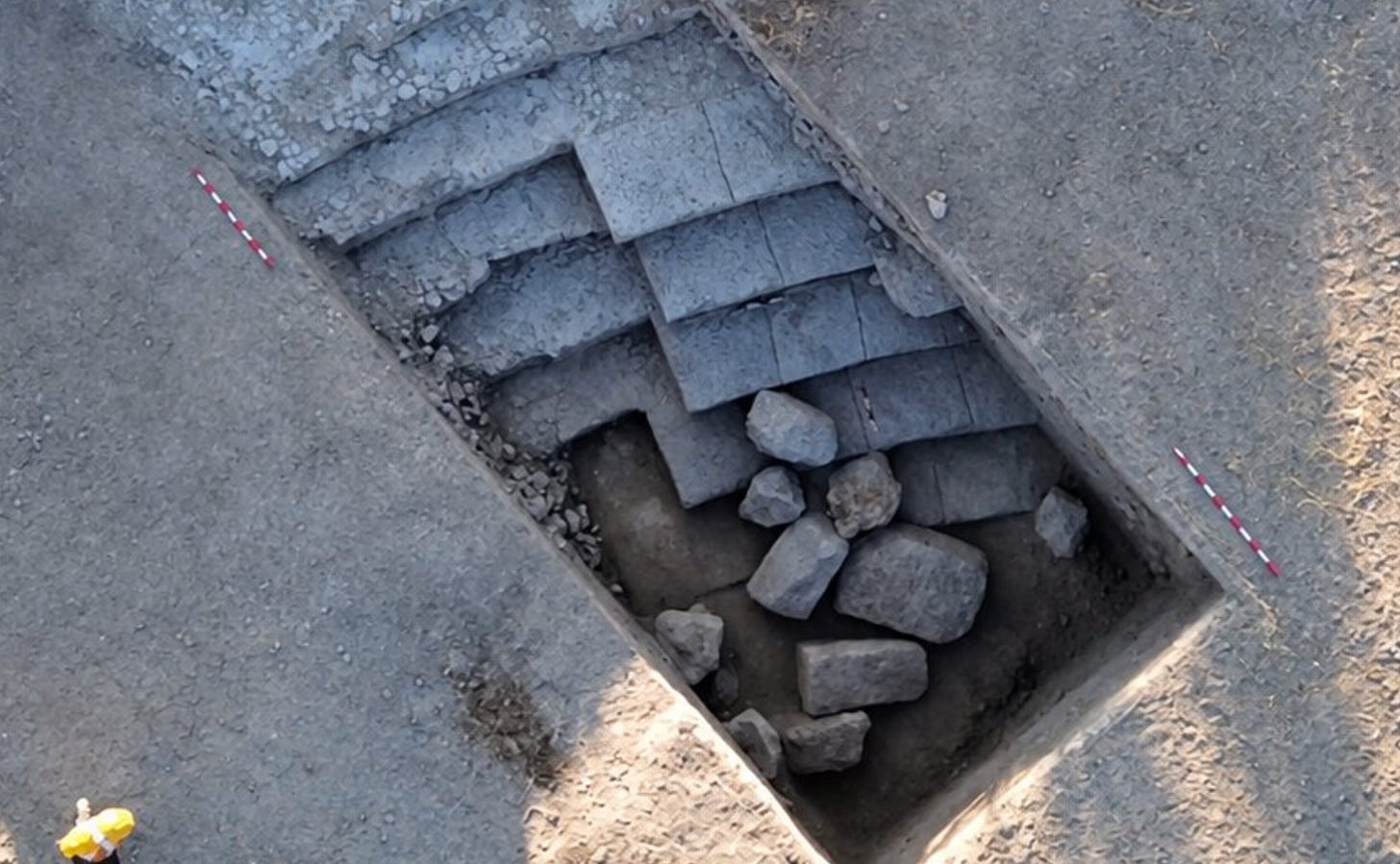
Turns out there’s still a lot of stuff buried beneath southern Spain, and now archaeologists excavating the ancient city of Singilia Barba (just 7km outside Antequera, MĂĄlaga) have uncovered part of a 52-meter-wide Roman theater, and its incredible state of preservation suggests it could rank among the best-kept Roman theaters on the Iberian Peninsula (probably not as cool as MĂ©rida's, but still
 Woo!)

  • Reality check. OK. Technically, we’ve known it was there for centuries. The theater has been documented since the 16th century, but nobody had actually excavated it. Archaeologists returned to Singilia Barba this year, after more than three decades without major excavations, and finally started digging.

  • And they got quite the surprise. The stone blocks making the theater’s seating are in exceptionally good condition; particularly impressive because the upper sections of Roman theaters are normally the first to disappear thanks to collapses, looting and generations of people recycling the stone for other buildings.

Thank all that dirt. Singilia Barba was gradually abandoned and eventually disappeared around the 12th century, leaving much of the ancient city buried, and those enormous quantities of earth effectively turned the theater into a giant archaeological time capsule.

  • Here’s the exciting part. They’ve excavated only around 5% of it. If the rest is preserved as well as what they’ve uncovered so far, researchers believe Singilia Barba could be comparable to Roman theaters at MedellĂ­n and Regina in Extremadura.

  • That 5% is already a lot. Archaeologists have found hairpins indicating the presence of women in the theater, as well as marble imported from places including Greece and modern-day Turkey, evidence of the wealth and far-reaching connections of the people who lived here.

What exactly was Singilia Barba? The important ancient city's history predates the Romans, with evidence of settlement going back to at least the 3rd century BC. Under Rome, it eventually became Municipium Flavium Liberum Singiliense (try saying that quickly) and reached its peak during the Flavian period (Google it, kids!).

  • Archaeologists have identified a 350m circus (the Roman kind), houses, cemeteries, and a forum containing temples, smaller shrines, a basilica, and a monumental paved square.

  • The people digging it up are a team led by archaeologist Manuel Romero PĂ©rez alongside Complutense University researchers Sergio España Chamorro and Luis Romero Novella, with support from Antequera’s city government.

Researchers are now looking for funding for another excavation campaign next year. With 5% scratched away, they now just need the money to dig up the other 95%.


🔔 Don’t forget to follow us on Instagram!

If you’re not following us on Instagram yet, you’re missing out. We’re posting exclusive content with our collaborators across Spain, breaking news updates, and pop culture coverage. Click on the post above and come hang with us!

🙏 Once again, please remember to share this newsletter with your friends on social media. The more we grow, the more information we’ll be able to offer each week.

Share