

🚅 A new train crash rocks Spain
Plus: Mbappé steps in it, a Roman necropolis, and who's behind the Barcelona riots?
Madrid | Issue #166 | The Bubble is Spain's #1 English-language newsletter. We offer paid and free subscriptions (which you can customize). For sponsorships, click here.
💔 A second high-speed train disaster leaves at least 68 dead
Tragedy has struck Spain’s high-speed train network for the second time this year, with even more deadly repercussions. Just before 9 a.m. yesterday, an AVE train travelling south toward Sevilla rear-ended a stationary Iryo train near the town of Urda (Toledo), killing at least 68 people and leaving more than 100 injured.
Horrible echo of an earlier tragedy. It is the second major fatal train accident in 2026, after a January crash where 46 people died when a speeding southbound train slammed into a northbound train whose last two cars had derailed and slid across the tracks just outside Adamuz (Córdoba) on the same Madrid-Sevilla line. (Two other crashes killed one person each.)
Further complication. This crash will likely elicit even more bitter political recriminations as the tragedy comes in the midst of the tense and highly polarized pre-election season.
What we know:
The monitoring system failed. At 8:30 a.m., the LZB safety system (a German railway safety technology — Linienzugbeeinflussung — that continuously monitors train speeds and transmits traffic instructions to the train engineers) failed across a 63km stretch of the Madrid-Seville line, automatically stopping at least six trains in the affected area. Protocol then required the control center in Madrid's Atocha station to manage traffic manually.
A bad decision was made. At 8:36 a.m., the controller authorized the stopped trains to resume at normal speed — despite a red signal, a still-occupied section of track, and the Iryo sitting stationary at Urda station. One driver on a different train pushed back, telling the controller that protocol required moving at “marcha a la vista” (max 40 km/h) — the controller apparently corrected the instructions for that driver, but never relayed this to the other trains, including the AVE.
The stalled train issued a warning. At 8:48 a.m. — five minutes before impact — the Iryo driver called Atocha to say she still couldn’t restart. Still, no warning was made to the speeding AVE. For 17 minutes, controllers could see the AVE bearing down on the stationary Iryo on their screens. Nobody stopped it.
The crash. Impact was at 8:53 a.m., at km 118. The AVE’s front car drove into the rear of the Iryo. Three Iryo wagons and one AVE wagon fell down an embankment. Rescue workers described scenes “indescribable and horrific.” The controller has been questioned by the Guardia Civil and is with a lawyer and psychologist. All control room staff have been interviewed separately.
Officials are still baffled. Transport Minister Óscar Puente called the decision to resume normal speed “inexplicable” and pointed to human error. He declined to say whether he would resign. The machinists’ union, which had a strike planned for tomorrow over railway safety concerns, is maintaining it.
What we don’t know:
There's a lot. The AVE’s speed at impact (potentially up to 200 km/h, but still unconfirmed). The final death toll — rescuers were still extracting bodies from two crushed Iryo wagons as of this evening, and the government has not yet released a count of the missing.
The identities of all the victims, including confirmed foreign nationals. (One missing: former labor minister Fátima Báñez of the PP.) And, most critically: why a controller with a stationary train on his screen, a red signal, a driver’s warning, and a second call from the Iryo’s own driver still sent a 397-passenger train hurtling into it.
Everyone wants answers. Most parties suspended their campaign activities as condolences gave way to demands for explanations. But while campaigns paused, recriminations didn't.
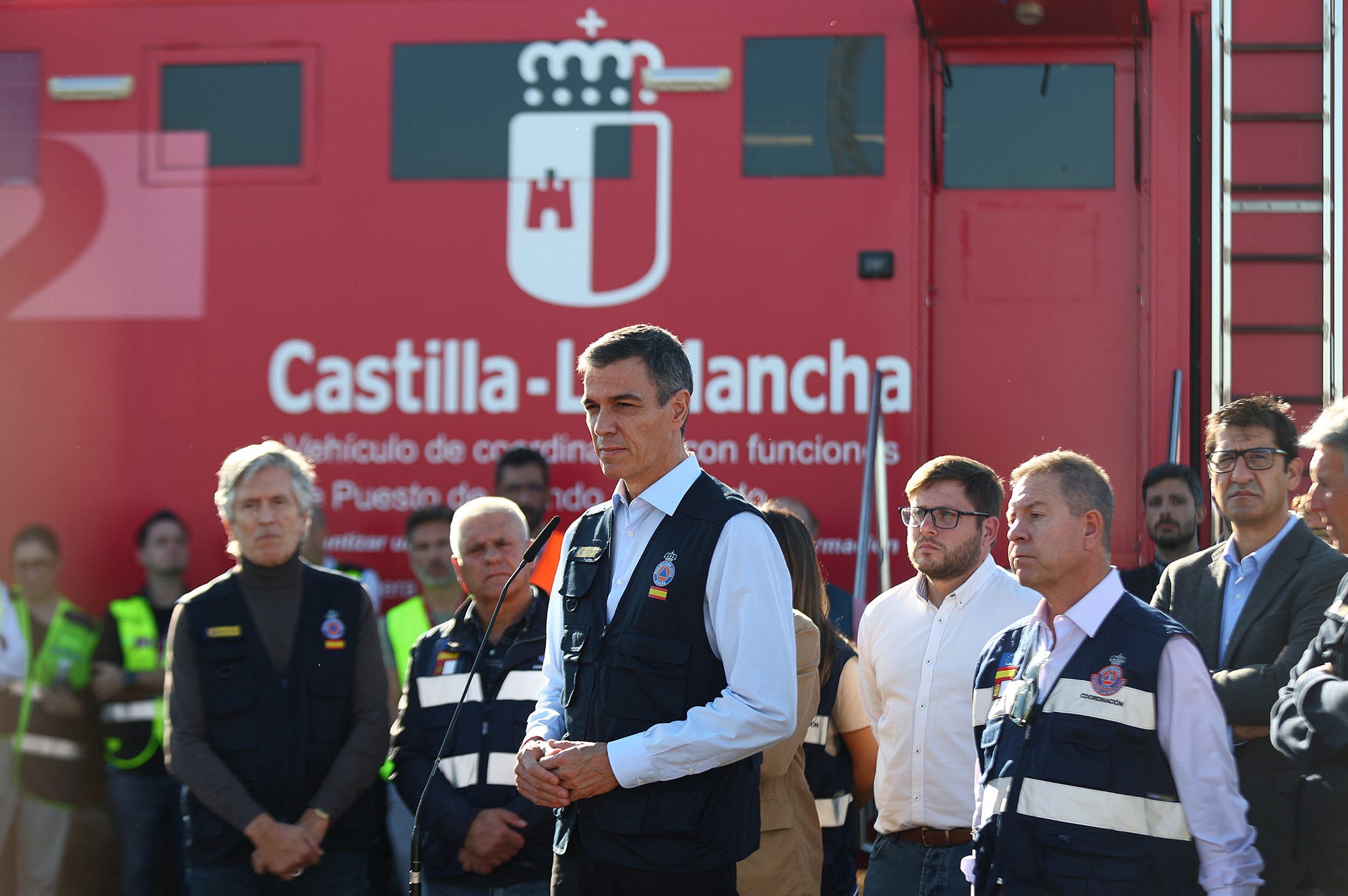
Prime Minister Pedro Sánchez traveled to the crash site and, speaking from there, announced three days of national mourning and promised a full investigation, saying, “If there has been negligence, it will come to light.”
PP leader Alberto Núñez Feijóo called for an immediate government investigation, a judicial inquiry “without interference” and a complete, independent review of the railway network, saying Spain “has a right to know what is happening to its infrastructure.”
The pressure was coming from the left too. Frente Amplio, the left-wing coalition that includes the government's Sumar junior partner, demanded an independent audit and accountability “at every level”, explicitly including political responsibility.
Vox was the outlier. Santiago Abascal’s far-right party was the only one to maintain its campaign agenda, arguing that mourning was being used to silence criticism. At a rally in Valladolid, Abascal said the government was a “criminal organization” and blamed the tragedy on the government's corruption and ideological fanaticism. (Vox also filed a criminal complaint alleging negligent homicide against those responsible at Adif, the train network, specifically the control-room operators who authorized trains to continue after the signal failure.)
Anger in the streets. Police broke up protests that were held outside the Transport Ministry and PSOE’s headquarters on Madrid’s Calle Ferraz.
Sánchez's uphill campaign to retain power got steeper. With roughly a month until the Nov. 29 vote, he was already fighting a battle to persuade voters to give him another term. This will likely make it much more difficult.
After eight years in power… Sánchez will have to explain how another catastrophic failure happened on his watch, months after Adamuz, and convince the public that the railway is safe.
Who was in charge? The questions about competence and accountability will follow him to election day, making re-election nothing short of a miracle.
More news below. 👇👇
🎙️ A new episode 8 of The Bubble Podcast is out!
Foreign policy and guiri confessions: former Foreign Minister Arancha González Laya joins our latest podcast to discuss Spain’s place in the world.
We also tackle the pension debate and hear American creator Danielle Grobman’s tips for escaping Madrid’s “expat” bubble. Escaping The Bubble remains discouraged. Listen now on Spotify, YouTube, and Apple Podcasts.
💬 Five things to discuss at dinner parties
1. 💥 Who is Blocus, the mysterious movement behind Barcelona’s riots?
Burn it all down. Last weekend, hundreds of masked teenagers took to the streets of Barcelona, smashing storefronts, looting businesses, and setting fires. Similar unrest surfaced in Bilbao on Monday night (although that seems to be unrelated).
The images were similar to those from France during the recent student protests. But here’s the strange part: In this case, nobody seems to know who’s organizing them or what they are protesting.
What happened? Around 500 young people descended on central Barcelona on Saturday, leaving a path of destruction.
A night of chaos. Luxury shops were looted, and more than 30 fires were started while police arrested 130 people (76 of them minors).
An atypical event. The protest was… not really a protest. No one could identify any organizers (it had no relation to the ongoing housing or education protests), and there were no clear political demands. In fact, Catalan authorities say the gathering seemed to be designed for vandalism and theft, not political activism.
So who’s behind it? That’s the million-euro question. The whole thing was promoted under the mysterious name Blocus (French for blockade), which borrowed imagery from the protests in France.
How it works. Anonymous TikTok accounts recruit teenagers using viral videos and QR codes linking to WhatsApp and Telegram groups. Inside, participants receive meeting points, instructions to dress in black, and lists of shops to target.
But who’s pulling the strings? Nobody knows (Google “quién está detras de Blocus?” and you’ll see every major media outlet in Spain is wondering the same thing). Some experts suspect political or even foreign interference, but for now there’s no evidence establishing who’s responsible or that foreign actors are involved.
Of course, it’s now become an election issue. PP leader Alberto Núñez Feijóo has blamed the Sánchez government and the far left for the chaos. Leftist leaders, however, say that it’s the far right who benefits politically from scenes of chaos. Neither side has produced evidence identifying the organizers.
Authorities aren’t amused. Catalan president Salvador Illa warned that parents could face consequences if their underage children cannot pay for the damage. Meanwhile, police have enlisted Spain’s counterterrorism and organized crime intelligence center to help shut down Telegram groups encouraging further violence. (Three have already been closed).
Apparently it’s not over. Blocus-linked accounts have been calling for another round of gatherings this Saturday, Oct. 31 (Halloween), including in Barcelona. Police are monitoring the calls and preparing for possible unrest.
2. ⛺️ Sol’s campers are packing up (at least some of them)
The housing protest in Puerta del Sol may be entering its final chapter after a month of tents and enough blue tarpaulin to gift-wrap downtown Madrid.
A recap of Camp Sol. The occupation began after the eviction of Maricarmen, the 87-year-old woman who died two weeks after losing her home, and grew into a sprawling protest against Spain’s housing crisis.
At its peak, it allegedly housed around 2,000 people in 1,800 tents. Camp Sol had its own “neighborhoods”, kitchens, and volunteer teams. It also provided food and shelter to dozens of homeless people, a responsibility that won’t disappear when somebody folds up the last camping chair.
Reality check. Now, some of the original organizers say it’s time to leave on their own terms and focus on the Nov. 11 general strike (apparently packing will take days).
Chao! While some tents have already disappeared, there’s still a core group insisting this is merely a reshuffle, with campers moving into the central enclosure. They are saying that “the camp continues” and that “there is no withdrawal.”
Patience, meet limit. Madrid’s regional government has sort of had it after spending time demanding an eviction, a request that has been denied twice by the Madrid High Court.
Please clear them. The administration of Madrid regional president Isabel Díaz Ayuso asked the central government’s representative in the region to clear the square and went to court when that didn’t happen. But it couldn’t simply send in the police itself: responsibility for a public-order eviction rests with the national authorities, which have defended the right to peaceful assembly.
From bad to worse. On Sunday, police arrested a 26-year-old man after a woman reported that he entered her tent and sexually touched her while she slept. He is also accused of punching someone who intervened.
There’s still no agreed departure date. But the argument for leaving is gaining ground. Better to pack up voluntarily than wait to get tossed, right?
3. ⚽ Everyone is sorry that Mbappé pissed off China
Don’t be so sensitive! ‘Dictator’ was just a joke! Now, we’ve all made jokes that we thought were funny but upset someone. But we’re not all Real Madrid star Kylian Mbappé, and the guy we pissed off wasn’t the entire country of China.
The 411: On a French talk show, Mbappé was asked which meme of himself makes him laugh most. His answer: the one where his face is superimposed on “some guy — I think he’s a Chinese dictator.” (That guy is Mao Zedong. And honestly? The resemblance is uncanny.) He didn’t say Mao’s name — didn’t need to. The clip went viral in China, and the rest, well, is diplomatic history.
Wait, why does Mbappé even have a dictator meme? It’s been circulating since 2024 when he supposedly had his lawyer tell a Marseille kebab shop to stop using his name in the description of bread “as round as Mbappe’s skull.” (Some trace it to 2022.) It came to refer to his notoriously controlling behavior at PSG — reportedly demanding squad decisions, directing ground crew, and being acclaimed by a literally bowing Didier Deschamps, the national team coach.
One PSG insider told The Athletic that “the dictator thing is not wholly inaccurate.” The meme spread to showing Mbappé as or alongside Kim Jong Un, Stalin — and eventually Mao, which is where things got complicated.
How complicated? The problem wasn’t the meme per se — but Mbappé’s claim that he liked it. Three Chinese sponsors terminated their contracts immediately. CCTV suspended its showing of Spain’s La Liga games. Mbappé’s Chinese social media accounts were muted. The Chinese Foreign Ministry weighed in.
Sorry! La Liga’s president Javier Tebas apologized. So did Real Madrid. And Mbappé apologized — in French, English, and Mandarin.
This is also a good moment to note that China does this a lot. The NBA was blacklisted by China’s state CCTV broadcaster for almost two years after a Houston Rockets executive tweeted support for Hong Kong in 2019. Airlines have been forced to list Taiwan as part of China on their websites.
And it’s really bad for Spanish fútbol. La Liga has a Shanghai office, 380 games a season on Chinese streaming, and hundreds of millions in revenue at stake (some peg it at €400m). When Beijing frowns, the apologies arrive very fast.
So far, not quite enough. CCTV’s verdict on Mbappé’s apology: “We will listen to his words, but watch his actions even more closely.” In other words, grovel harder.
4. 📚 Madrid’s oldest bookstore’s got massive drama
Pérgamo, in Madrid’s Barrio Salamanca, is the city’s oldest bookstore at 80 years of age. It’s also the scene of… a great double-cross! False victimhood! Betrayal! Underhand contract shenanigans! Just like a good book, we suppose.
What happened? The 27-year-old bookseller who was brought in to save it quietly registered the Pérgamo trademark behind the owner’s back, then went on TV claiming they were being evicted due to Maricarmen-style real estate pressure — when his rent had never been raised once in four years.
Juicy! What’s the full story? In 2022, Ana Serrano, 72, and her sister decided to retire and close Pérgamo, the bookshop their parents opened in 1946. Enter Juan José Janeiro, a Mexican investor who happened to walk in one day and decided, on a whim, to save it.
Janeiro rented the space from Serrano for €2,600/month — never raised, 40% below market — and brought in a literary contact, writer Jorge Hernández, and a young, enthusiastic Sevillano named Pablo Cerezo to run the day-to-day.
For two years, it worked beautifully. Cerezo built a 61,000-follower Instagram, filled the old shelves with events and Saturday vermús, and became the public face of Madrid’s most storied bookshop.
But, but, but… Then Hernández left, the finances got messy, and the investor offered Cerezo and a colleague 30% each of the operating company, Xeito Libreros.
Here’s where things get interesting. In 2024, without telling Serrano, Xeito quietly registered the Pérgamo trademark — the name, the distinctive slanted font, the purple color — with Spain’s patent office. Serrano only found out when El País called to ask her about it 😮. She described it as “a shell game.”
Everything falls apart. A missed rent payment in August 2026 finally broke the relationship between Serrano and Cerezo. The original three-year contract had already expired in April 2025 and was month-to-month. The investor Janeiro walked, calling the business unviable.
The housing crisis coattails. Even as the relationship was collapsing, Cerezo rode the Maricarmen wave — appearing alongside politicians, becoming a spokesperson for a booksellers’ association campaigning against rent hikes, and telling Cadena SER, “They’re not renewing our lease.”
Huh? Serrano was bewildered. She had never raised his rent once nor kicked anyone out, she says.
Really?! Cerezo says Pérgamo is moving — with him, because he owns the trademark. Serrano says the name belongs to her family, and she’s already got four offers to keep a bookshop in the space.
Who says owning a bookshop is boring?
5. 💀 Málaga was extending its metro but found 1,000 Romans instead

Just in time for Halloween. Imagine digging a hole in the ground and finding skeletons! That’s exactly what happened to a bunch of construction workers who were extending Málaga’s metro and suddenly uncovered an enormous Roman cemetery right under the city’s streets.
The ruins contained the remains of more than 1,000 people buried nearly 2,000 years ago. The discovery is so significant that archaeologists may have to rewrite part of the city’s history.
What exactly did they find? A 400-meter-long necropolis (an ancient cemetery in nerd speak) beneath Calle Hilera, near Corte Inglés. So far, archaeologists have identified 984 burial structures dating from the 2nd to 4th centuries AD, when Málaga was part of the Roman Empire.
And it’s all remarkably well preserved. The graves include everything from simple burial pits and elaborate stone structures to bodies covered with Roman roof tiles. Some infants were even buried inside amphorae, the large ceramic jars Romans used to transport wine and olive oil.
FYI, this wasn’t discovered overnight. Archaeologists first identified 274 graves in December 2025. By last week, that number had climbed to 984, making it one of Spain’s most significant Roman burial discoveries.
Wait, Málaga was Roman? You should know this, but yes, very much so. The city was originally founded by the Phoenicians around the 8th century BC and was known as Malaka.
Under Roman rule, it became Malaca, an important Mediterranean trading port famous for its fish-salting industry and garum, a fermented fish sauce (yum!) the Romans couldn’t get enough of. Its Roman theater, still standing in the city center, dates from the 1st century BC.
So why is this such a big deal? Because archaeologists previously believed this part of Málaga had been reclaimed from the sea during the Islamic period, centuries after the Romans. Finding an enormous Roman cemetery here suggests the ancient coastline and city boundaries were different from what historians thought.
There’s another clue. Romans generally buried their dead outside city limits, often alongside major roads. Researchers think this necropolis followed an ancient route leading from Malaca toward the coast, potentially revealing an entirely forgotten part of the city’s geography.
What happens now? Archaeologists and anthropologists are studying the remains to learn more about the people who lived and died in Roman Málaga. Most finds will eventually be transferred to the Museo de Málaga, while some of the best-preserved burial structures will be displayed near Guadalmedina metro station.
Wait, what about the metro? Construction is continuing alongside the archaeological work, which is expected to last into early 2027.
🔔 Don’t forget to follow us on Instagram!
If you’re not following us on Instagram yet, you’re missing out. We’re posting exclusive content with our collaborators across Spain, breaking news updates, and pop culture coverage. Click on the post above and come hang with us!
🙏 Once again, please remember to share this newsletter with your friends on social media. The more we grow, the more information we’ll be able to offer each week.